Buyers sourcing nylon web belt often assume all nylon webbing is built the same way, but construction changes everything from flexibility to breaking strength. We get this question every week from procurement teams comparing samples: what is the difference between tubular and woven nylon web belt? In short, tubular nylon webbing is knitted into a hollow, tube-like cross-section, while woven (flat) nylon webbing is a single flat strap woven on a shuttle or needle loom. As of 2026, both remain current industry standards, and each construction suits different load, weight, and finishing requirements. This guide breaks down the structural, performance, and sourcing differences so you can specify correctly for your application.
Tubular vs Woven Construction: The Fundamental Difference
What Makes Tubular Webbing Different
Tubular nylon webbing is produced with a circular or flattened-tube weave, giving it a hollow core rather than a single flat cross-section. Our Tubular Nylon Webbing line runs 100% nylon in widths from 16mm to 50mm, and the tube structure is what gives it a softer hand-feel and higher compressibility compared to flat weaves.
What Makes Woven (Flat) Webbing Different
Woven nylon webbing, by contrast, is a solid flat strap produced on a needle or shuttle loom in a single plane. Product lines such as Heavy Duty Nylon Webbing (25-100mm width, 2000-8000lbs tensile strength) and Mil-Spec Nylon Webbing (25-100mm width, 3000-10000lbs tensile strength) fall into this category, sourced from high-tenacity nylon yarns.
- Tubular: hollow tube weave, softer edges, common in narrow widths
- Woven flat: single-plane weave, denser, common in load-bearing widths 25-100mm
- Both constructions are produced in-house on webbing looms; we run QC checks each batch for width consistency and edge finish
Strength, Flexibility & Performance Comparison
Side-by-Side Comparison
| Attribute | Tubular Nylon Webbing | Woven Flat Nylon Webbing |
| Cross-section | Hollow tube | Single flat plane |
| Typical width range | 16-50mm | 25-100mm |
| Tensile strength (flat-woven variants like Heavy Duty / Mil-Spec) | Lower per width vs equivalent flat weave | 2000-10000lbs depending on grade |
| Flexibility | More pliable, folds easily | Stiffer, holds shape under load |
| Common finishing | Edge-folded straps, drawstrings | Stitched webbing, hardware attachment |
Why This Matters
Compared to woven flat construction, tubular webbing distributes stitching load differently because there is no exposed selvedge edge to fray — this is why it's favored where webbing is folded, sewn into loops, or run through hardware repeatedly. Woven flat webbing, however, is the standard for high tensile applications: Mil-Spec Nylon Webbing is built to MIL-SPEC-adjacent tensile ranges of 3000-10000lbs, unlike tubular constructions which are generally not rated for the same heavy-load tensile classes at comparable widths.
Common Applications for Each Type
Where Tubular Nylon Webbing Is Used
- Drawstrings and cord channels in Backpack and apparel construction
- Lightweight strap loops where a soft hand-feel matters
- Narrow-width trims where the 16-50mm range fits standard hardware
Where Woven Flat Nylon Webbing Is Used
- Safety Harness and fall-protection systems requiring documented tensile ratings
- Climbing Equipment slings and runners where breaking strength is critical
- Tactical Gear for the Military & Tactical Industry, where Tactical Jacquard Webbing and Mil-Spec Nylon Webbing are specified for load-bearing rigs
- Reflective safety applications using Reflective Nylon Webbing for high-visibility strapping
In our experience prepping bulk kits for outdoor and tactical brands, flat woven grades are specified whenever a certified tensile figure needs to be quoted on a spec sheet, while tubular constructions are selected for comfort-driven or cosmetic strap components.
How to Choose the Right Construction for Your Order
A Practical Selection Checklist
1. Confirm your load requirement — if you need a documented tensile spec above 2000lbs, default to woven flat grades like Heavy Duty Nylon Webbing or Mil-Spec Nylon Webbing
2. Confirm your width — tubular tops out around 50mm; for anything wider you need a flat weave
3. Confirm the finished use — drawcords and soft loops favor tubular; hardware-attached straps favor flat woven
4. Confirm color and branding needs — flat weaves accept dye-sublimation and reflective treatments more consistently at scale
Bulk Sourcing Notes
We run both tubular and flat woven nylon webbing on dedicated looms and support export-quality bulk orders for buyers across North America and Europe. Compared to sourcing mixed constructions from multiple vendors, consolidating tubular and woven nylon webbing under one supplier simplifies QC and color-matching across a product line, since both are tested against the same nylon yarn lot.
Frequently Asked Questions
What is the difference between tubular and woven nylon web belt in terms of strength?
Woven flat nylon webbing generally carries higher documented tensile ratings — for example, Mil-Spec Nylon Webbing is rated 3000-10000lbs and Heavy Duty Nylon Webbing is rated 2000-8000lbs. Tubular nylon webbing, due to its hollow-tube construction, is typically specified for lighter-duty, narrower-width applications rather than heavy load-bearing use.
Can tubular nylon webbing be used for safety harnesses?
For certified load-bearing safety applications such as fall protection, woven flat constructions with documented tensile strength are the standard choice. Tubular nylon webbing is better suited to non-load-bearing components like drawcords and soft trim rather than primary safety harness webbing.
What widths are available for tubular vs woven nylon webbing?
Tubular Nylon Webbing is produced in 16-50mm widths, while woven flat grades such as Heavy Duty Nylon Webbing and Mil-Spec Nylon Webbing are produced in 25-100mm widths, giving buyers a wider range for load-bearing applications.
Does tubular webbing cost less than woven nylon webbing?
Cost depends on width, yarn tenacity, and finishing rather than construction type alone. Buyers should request a quote based on the exact specification, since both tubular and woven nylon webbing are produced from the same base nylon yarn but differ in loom setup and yield per meter.
Is tubular or woven nylon webbing better for tactical gear?
Tactical Gear for the Military & Tactical Industry typically specifies woven flat constructions such as Mil-Spec Nylon Webbing or Tactical Jacquard Webbing, since these deliver documented tensile ratings required for load-bearing rigs. Tubular webbing is more common in secondary components like drawcords within the same kit.
Related Resources
Related Products (3)
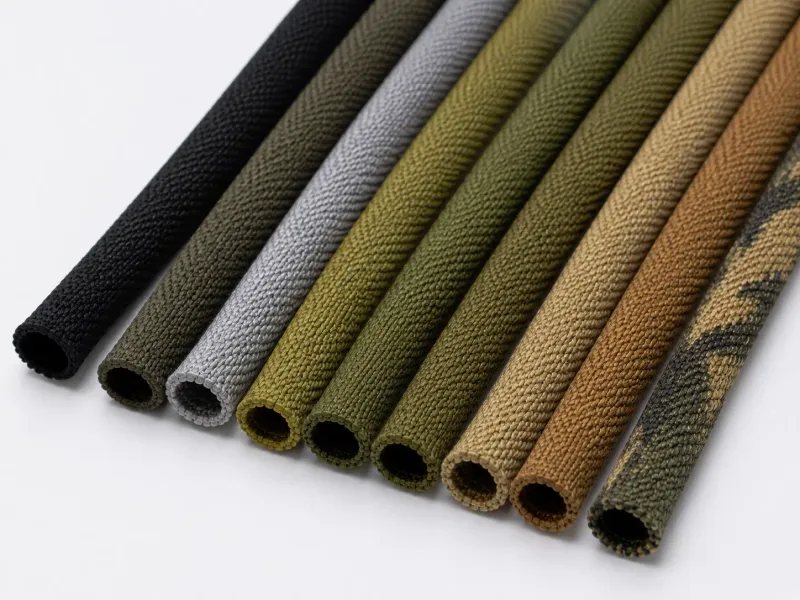
Tubular Nylon Webbing
Premium tubular nylon webbing designed for climbing, rescue and fall protection equipment.
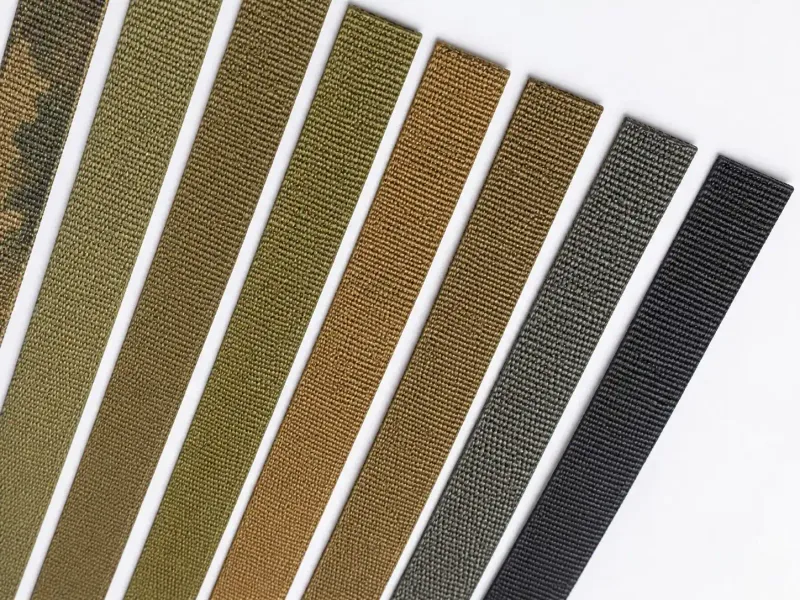
Mil-Spec Nylon Webbing
Military-grade nylon webbing engineered for tactical equipment, load-bearing systems and defense applications.
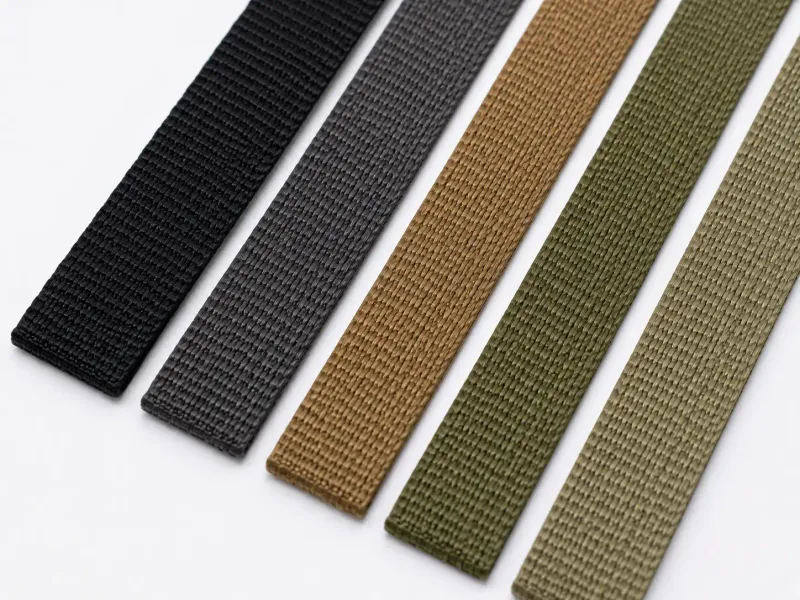
Heavy Duty Nylon Webbing
High-strength nylon webbing designed for industrial lifting, safety equipment and outdoor applications.
Related Categories
Related Applications
Related Industries
A construction-by-construction breakdown to help you specify the right nylon webbing for your build
Request Nylon Webbing Specifications & Samples