The automotive industry demands the highest standards for safety-critical components, and seat belt webbing is no exception. As global vehicle production continues to prioritize occupant protection, sourcing from top rated polyester webbing strap manufacturers for automotive seat belt use has become a strategic priority for OEMs and tier-one suppliers alike. Polyester webbing offers superior tensile strength, low elongation under load, and excellent resistance to UV degradation and chemical exposure — making it the material of choice for modern restraint systems. Our Seat Belt Polyester Webbing, manufactured to FMVSS-compatible specifications in 46-50mm widths, represents the intersection of proven performance and rigorous quality control that automotive procurement teams require.
Why Polyester Webbing Is the Standard for Automotive Seat Belts
Polyester webbing has emerged as the dominant material for automotive seat belt applications due to its exceptional combination of mechanical performance and environmental durability. Unlike natural fibers or alternative synthetics, polyester maintains consistent tensile properties across a wide temperature range and resists degradation from sweat, cleaning agents, and prolonged UV exposure.
Key performance characteristics of automotive-grade polyester webbing include:
- High tenacity construction delivering breaking strengths suitable for restraint system loads
- Low elongation — typically under 10% at working loads, ensuring minimal stretch during emergency events
- Excellent UV resistance compared to nylon, which degrades significantly under prolonged sunlight exposure
- Low moisture absorption (approximately 0.4% at standard conditions), preventing dimensional changes in humid environments
- Chemical compatibility with common automotive fluids, cleaning agents, and interior materials
When evaluating top rated polyester webbing strap manufacturers for automotive seat belt use, these material properties form the baseline against which all supplier claims must be measured. Manufacturers that cannot demonstrate consistent tensile performance and dimensional stability across production batches should be viewed with caution.
Seat Belt Polyester Webbing: Specifications & Standards
Our Seat Belt Polyester Webbing is engineered specifically for automotive restraint applications and manufactured to meet the performance requirements of FMVSS (Federal Motor Vehicle Safety Standards) compatibility.
Product Specifications
| Specification | Detail |
| Material | Automotive Polyester |
| Width | 46-50mm |
| Standard | FMVSS Compatible |
| Construction | Woven, high-density |
| Color | Custom available |
| Surface Finish | Smooth, low-friction weave |
The 46-50mm width range aligns with common automotive seat belt webbing dimensions used across major vehicle platforms. This width provides optimal load distribution across the occupant's body while maintaining compatibility with standard buckle and retractor hardware.
Comparison: Seat Belt Polyester Webbing vs. Seat Belt Nylon Webbing
| Property | Seat Belt Polyester Webbing | Seat Belt Nylon Webbing |
| Material | Automotive Polyester | Automotive Nylon |
| Width | 46-50mm | 46-50mm |
| Standard | FMVSS Compatible | FMVSS Compatible |
| Moisture Absorption | ~0.4% | ~4-5% |
| UV Resistance | Excellent | Moderate |
| Tensile Strength Retention (wet) | High | Reduced |
| Cost Efficiency | Lower material cost | Higher material cost |
Compared to Seat Belt Nylon Webbing, polyester webbing offers significantly lower moisture absorption — approximately 0.4% versus 4-5% for nylon. This difference is critical in automotive applications where seat belts are exposed to varying humidity levels and occasional moisture exposure. Unlike nylon, which loses tensile strength when wet, polyester maintains its mechanical integrity across all environmental conditions.
Heavy Duty Polyester Webbing for Demanding Automotive Applications
Beyond standard seat belt webbing, certain automotive applications require heavy duty polyester webbing with elevated tensile performance. Our Heavy Duty Polyester Webbing is available in widths from 25-100mm with tensile strengths ranging from 2000-10000lbs, making it suitable for specialized restraint systems, cargo tie-downs, and safety harness applications within vehicle interiors.
Heavy Duty Polyester Webbing Specifications
| Specification | Detail |
| Material | High Tenacity Polyester |
| Width | 25-100mm |
| Tensile Strength | 2000-10000lbs |
| Construction | High-density weave |
| Applications | Seat belt systems, safety harnesses, cargo restraint |
The 2000-10000lbs tensile strength range provides substantial safety margins for automotive restraint systems. When compared to lower-grade webbing products, heavy duty polyester webbing delivers consistent performance under dynamic loading conditions — a critical factor in crash scenarios where webbing must retain integrity throughout the event.
For manufacturers seeking to optimize weight without sacrificing strength, the high strength-to-weight ratio of heavy duty polyester webbing offers a competitive advantage. This is particularly relevant as the automotive industry continues to pursue vehicle weight reduction targets while maintaining or improving safety performance.
How to Evaluate Polyester Webbing Manufacturers for Automotive Use
Selecting the right supplier for automotive seat belt webbing requires careful assessment of manufacturing capability, quality systems, and technical expertise. The following criteria should be evaluated when identifying top rated polyester webbing strap manufacturers for automotive seat belt use.
Key Evaluation Criteria
- Material traceability — manufacturers should provide full documentation of fiber origin, batch numbers, and material certifications
- Testing capability — in-house or accredited laboratory testing for tensile strength, elongation, UV resistance, and color fastness
- Consistency controls — statistical process control data demonstrating batch-to-batch uniformity
- Industry experience — demonstrated track record supplying automotive or safety-critical applications
- Customization capability — ability to produce specific widths, colors, and finishes to OEM specifications
- Export quality — packaging and documentation suitable for international shipping and customs compliance
Questions to Ask Potential Suppliers
When engaging with manufacturers, procurement teams should request specific technical documentation including test reports, material safety data sheets, and production capability statements. Suppliers that can provide detailed specifications for their Seat Belt Polyester Webbing — including width tolerances, tensile test results, and environmental resistance data — demonstrate the technical maturity required for automotive supply chains.
We prep automotive-grade webbing for global delivery on a regular basis, and our quality checks each batch for tensile performance, width consistency, and surface quality. This experience allows us to identify potential issues before shipment and ensure that every roll meets the exacting standards required for seat belt applications.
Applications Beyond Standard Seat Belts
While seat belt webbing represents the primary automotive application for polyester webbing, the material's performance characteristics make it suitable for a range of related uses within vehicle manufacturing and the broader automotive industry.
Additional Automotive Applications
- Safety harness systems for racing and performance vehicles
- Cargo restraint webbing for commercial and passenger vehicles
- Child safety seat straps requiring high-strength, low-stretch webbing
- Industrial vehicle seat belts for trucks, buses, and agricultural equipment
- Emergency vehicle restraint systems
The versatility of polyester webbing across these applications stems from its consistent performance under load and resistance to environmental degradation. Unlike materials that require protective coatings or frequent replacement, automotive polyester webbing maintains its properties throughout the service life of the vehicle.
For manufacturers serving the Automotive Industry, having a single supplier capable of providing both standard Seat Belt Polyester Webbing and heavier gauge webbing for specialized applications simplifies procurement and ensures consistency across product lines.
Frequently Asked Questions
What width is standard for automotive seat belt polyester webbing?
The standard width for automotive seat belt webbing is 46-50mm, as specified in our Seat Belt Polyester Webbing product line. This width range is compatible with the majority of vehicle platforms and meets the dimensional requirements of common buckle and retractor hardware. Custom widths may be available for specialized applications.
How does polyester seat belt webbing compare to nylon in automotive applications?
Polyester seat belt webbing offers several advantages over nylon for automotive use. Polyester absorbs approximately 0.4% moisture compared to 4-5% for nylon, meaning it maintains consistent tensile strength in humid or wet conditions. Polyester also exhibits superior UV resistance, which is critical for seat belts exposed to sunlight through vehicle windows. While both materials can be manufactured to FMVSS-compatible standards, polyester's dimensional stability and environmental resistance make it the preferred choice for most modern automotive applications.
What tensile strength should automotive seat belt webbing meet?
Automotive seat belt webbing must meet specific tensile strength requirements defined by FMVSS standards and manufacturer specifications. Our Seat Belt Polyester Webbing is engineered to exceed minimum FMVSS requirements for restraint system webbing. For heavy duty applications, our Heavy Duty Polyester Webbing offers tensile strengths from 2000-10000lbs depending on width and construction, providing substantial safety margins beyond minimum regulatory requirements.
Can polyester webbing be produced in custom colors for automotive interiors?
Yes, our Seat Belt Polyester Webbing and other polyester webbing products are available in custom colors to match specific automotive interior requirements. Color matching is typically based on Pantone references or physical samples provided by the customer. Custom color production requires coordination with our dyeing and production teams to ensure color consistency across batches and compliance with automotive interior material specifications.
What documentation do automotive manufacturers typically require from webbing suppliers?
Automotive manufacturers and tier-one suppliers typically require material certifications, test reports covering tensile strength and elongation, UV resistance data, and chemical compatibility information. Our production process includes quality checks on each batch, and we provide comprehensive documentation including material safety data sheets and test results. For FMVSS-compatible products, we can supply documentation demonstrating compliance with relevant performance standards.
Related Resources
Related Products (3)
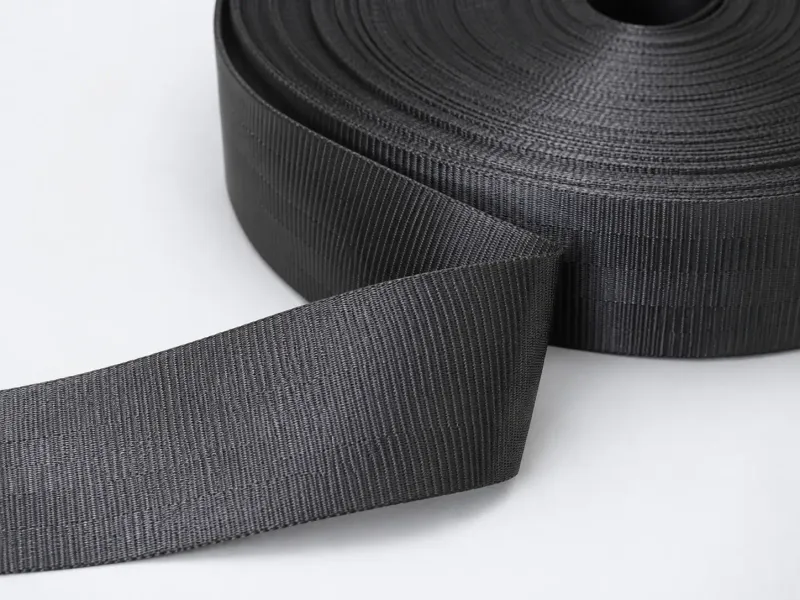
Seat Belt Polyester Webbing
Automotive-grade polyester webbing designed for seat belts and occupant restraint systems.
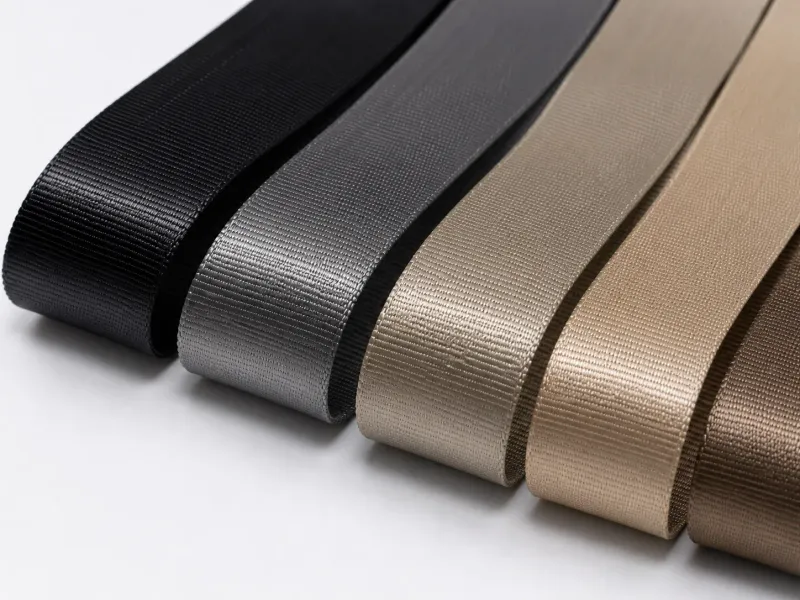
Seat Belt Nylon Webbing
Automotive-grade nylon webbing engineered for seat belts and occupant restraint systems.
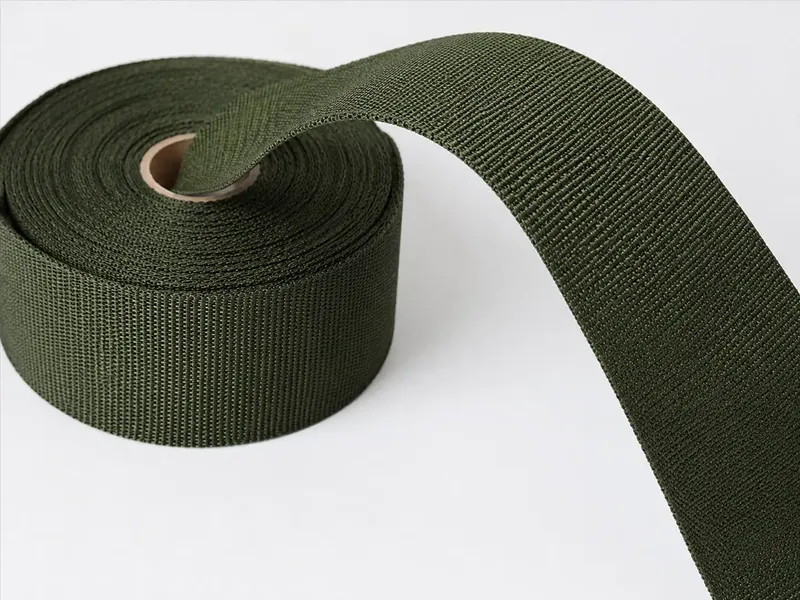
Heavy Duty Polyester Webbing
Industrial-grade polyester webbing designed for heavy-load applications and demanding outdoor environments.
Related Categories
Related Applications
Related Industries
FMVSS-compatible polyester webbing for automotive safety systems
Request Seat Belt Webbing Specifications