Knowing how to test industrial webbing belt tensile strength helps purchasing teams, product engineers, and quality staff verify whether a webbing construction is appropriate for its intended load path. Tensile strength is not a visual property: two belts with a similar width can fail at very different loads because yarn type, weave density, finishing, stitching, and gripping conditions differ. As of 2026, a documented, repeatable pull-test process remains essential for export-quality bulk webbing programs serving North America and Europe. This guide explains how to prepare specimens, run a controlled test, interpret failure modes, and compare results against the agreed product requirement.
Why Tensile Testing Is Necessary
Define the webbing strength question
A tensile test establishes the force at which a prepared webbing specimen breaks under controlled loading. It is different from an in-service assessment, where buckles, sewn joints, abrasion, heat, moisture, and routing around hardware can change the load path. For industrial procurement, the test report should identify the exact product, width, material, sample condition, test setup, maximum force, and failure location.
| Test subject | What the result represents |
| Unsewn webbing strip | Base construction breaking force |
| Sewn belt assembly | Combined webbing, thread, stitch, and hardware behavior |
| Conditioned sample | Performance after the agreed exposure or handling condition |
Compared with checking thickness or hand feel, a controlled tensile test produces a measurable failure value and a traceable failure mode. That distinction matters for Safety Harness, lifting, tactical, marine, and automotive-related sourcing.
Prepare Representative Test Specimens
Control the sample before the pull test
Start with specimens cut from the same production lot and construction that will be supplied. Label each strip individually and retain an untested reference piece. In our bulk webbing workflow, we treat traceability as part of the test result: a high value is not useful when the sample cannot be linked back to its material and lot.
| Product example | Published width | Published strength or property |
| Heavy Duty Polyester Webbing | **25-100 mm** | **2,000-10,000 lbs** tensile strength |
| Heavy Duty Nylon Webbing | **25-100 mm** | **2,000-8,000 lbs** tensile strength |
| UHMWPE Lifting Sling Webbing | **25-150 mm** | **10,000-50,000 lbs** tensile strength |
Do not compare results from different widths as though they are interchangeable. A 25 mm strip and a 100 mm strip may use related fibers but represent different constructions and available load-bearing yarn counts.
Run the Controlled Tensile Test
Load the specimen in a universal testing machine
Use a calibrated tensile-testing machine with grips selected for flexible woven material. Align the specimen centrally so the load is applied in the intended longitudinal direction. Grip damage, uneven clamping, or slippage can cause a misleading early break, so record the grip arrangement and observe the full test rather than relying only on the peak-force display.
| Observation | Interpretation | Follow-up |
| Break in central gauge area | Useful indication of webbing construction | Compare with the agreed requirement |
| Break at grip edge | Possible setup influence | Review grip pressure and retest |
| Specimen slips before failure | Peak force may be invalid | Change grip surface or clamping method |
For heat-exposed applications, material selection must remain separate from tensile testing. Industrial Aramid Webbing is published for operation from -50°C to 500°C, while Heat Resistant Aramid Webbing is published with resistance up to 500°C. A room-temperature pull result alone does not demonstrate behavior after thermal exposure.
Interpret Results by Material and Application
Compare like-for-like constructions
Review every specimen result against the approved technical requirement, then calculate the spread between results. The first question is not simply whether one strip achieved the highest force. It is whether all valid specimens reflect the required construction and whether their failure pattern is consistent. Keep raw machine data alongside the summary rather than reporting only one headline value.
| Material family | Relevant published consideration | Testing implication |
| UHMWPE Webbing | High tensile ranges are available | Confirm exact width and construction |
| Aramid Webbing | Temperature-focused products reach **500°C** | Test after agreed exposure when relevant |
| Nylon Webbing | Heavy-duty products list **2,000-8,000 lbs** | Compare only equivalent product widths |
| Polyester Webbing | Heavy-duty products list **2,000-10,000 lbs** | Preserve lot and construction records |
Unlike a generic material comparison, an application-level review considers the complete belt. For a Safety Harness or Climbing Equipment design, a webbing-only break and an assembled-system break answer different engineering questions.
Create a Repeatable Quality-Control Record
Document each batch for purchasing and engineering
A practical tensile-test record allows engineering, quality, and sourcing teams to assess repeatability across bulk orders. For export and wholesale programs, agree the acceptance requirement before manufacturing begins, including the product definition, test configuration, number of specimens, required data, and treatment of invalid tests. This prevents a later comparison between non-equivalent samples.
| Report field | Why it matters |
| Lot identification | Connects result to bulk production |
| Test configuration | Makes repeat testing comparable |
| Failure location | Identifies webbing versus assembly limitations |
| Peak force per specimen | Shows result variation |
Webbingmaker can discuss material, width, and application parameters for custom or bulk industrial webbing inquiries. For a valid purchasing decision, provide the intended application, target width, assembly details, and the force requirement used by your engineering or compliance team.
Frequently Asked Questions
What equipment is used to test industrial webbing belt tensile strength?
A controlled test normally uses a calibrated universal tensile-testing machine, suitable grips, and a data system that records force and extension. The setup must hold the webbing without slipping or cutting it at the jaws. Record the specimen width, gauge length, grip configuration, peak force, and failure location for every valid test.
Should webbing be tested alone or as a completed belt assembly?
Test the webbing alone when the purpose is to verify base construction strength. Test the completed assembly when stitching, buckles, loops, or hardware will carry load in use. A sewn assembly can fail at the stitch line or hardware interface before the webbing reaches its standalone breaking force, so the two results should not be treated as equivalent.
How many webbing specimens should be tensile tested?
The required specimen count should be agreed in the product test plan before testing. Use multiple specimens from the same lot so the result shows variation, and identify invalid tests caused by slip or grip damage. A single result is useful for investigation but provides limited evidence of batch consistency.
Can published webbing tensile strength be used for every belt design?
No. Published tensile ranges apply to the specified webbing product, material, and width, not automatically to a finished belt. For example, UHMWPE Lifting Sling Webbing is published at 10,000-50,000 lbs, while a finished configuration may have different behavior because of sewing, hardware, routing, or environmental exposure.
Related Resources
Related Products (3)
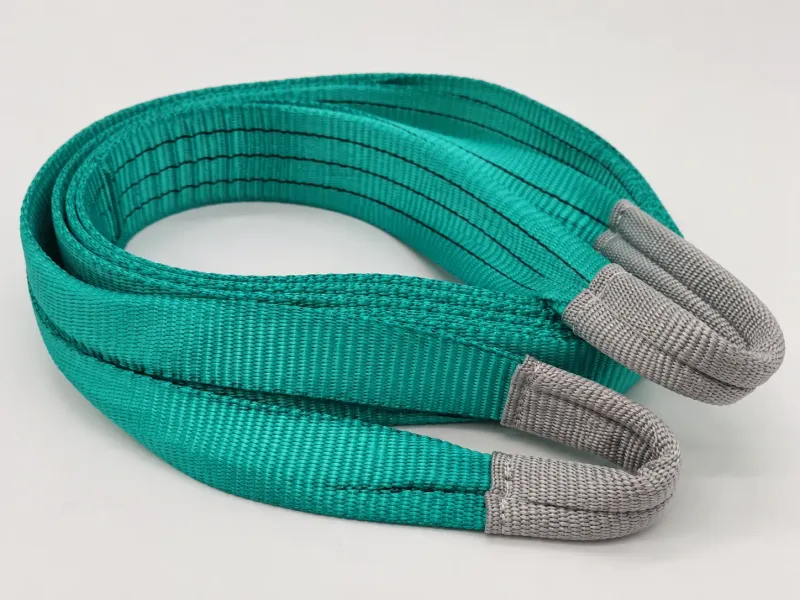
UHMWPE Lifting Sling Webbing
Ultra-high-strength UHMWPE webbing developed for lifting slings and rigging systems.
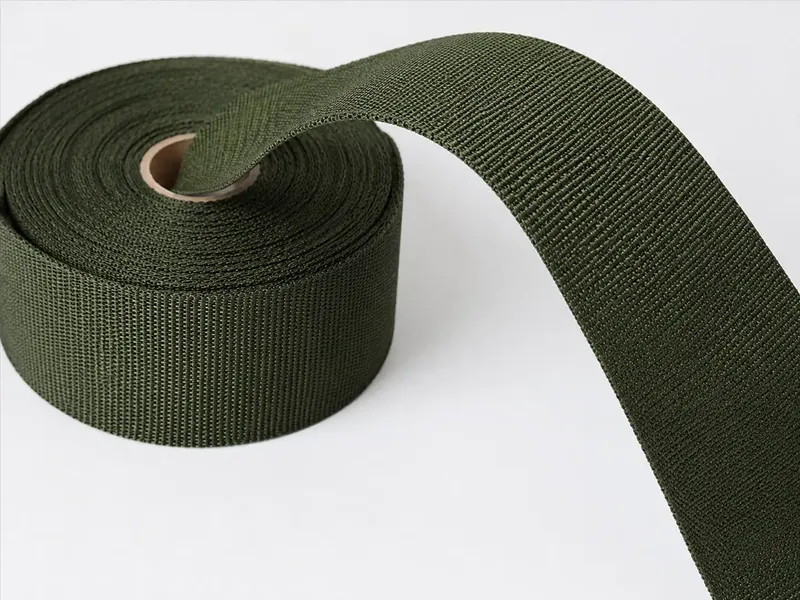
Heavy Duty Polyester Webbing
Industrial-grade polyester webbing designed for heavy-load applications and demanding outdoor environments.
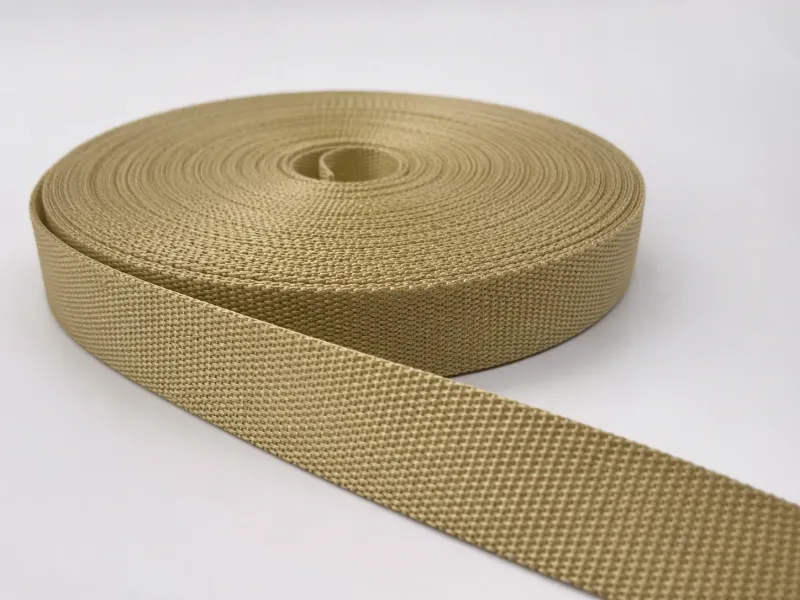
Industrial Aramid Webbing
Heavy-duty aramid webbing for industrial manufacturing, thermal protection and specialized equipment.
Related Applications
Related Industries
A practical method for measuring webbing strength before production use
Discuss Your Webbing Test Requirements