When specifying webbing for industrial, safety, or consumer applications, the choice between polyester and cotton fundamentally determines product lifespan and performance. As of 2026, our engineering team evaluates thousands of material selections annually across global markets. This guide provides a data-driven comparison of polyester webbing vs cotton webbing for durability, helping procurement and product development teams select the optimal material for their specific requirements.
Material Science: Why Polyester Outlasts Cotton
The Fundamental Difference Between Synthetic and Natural Fibers
Polyester webbing is manufactured from polyethylene terephthalate (PET), a synthetic polymer extruded through spinnerets to form continuous filaments. This process creates a uniform molecular structure with consistent tensile properties along the entire fiber length. Heavy Duty Polyester Webbing from our production lines delivers tensile strength ranging from 2000 to 10000 lbs depending on width and construction.
Cotton webbing, by contrast, is produced from natural cellulose fibers spun and woven into flat or tubular constructions. The Heavy Duty Cotton Webbing we manufacture (width 20-100mm, thickness 1.2-3.5mm) offers a softer hand feel and natural aesthetic, but its tensile strength typically ranges from 800 to 3000 lbs — substantially lower than equivalent-width polyester variants.
- Polyester molecular chains are tightly packed, creating resistance to abrasion, stretching, and chemical attack
- Cotton fibers contain natural impurities and voids that create weak points under cyclic loading
- Synthetic fiber extrusion allows precise control over denier, twist, and weave density
- Natural fiber spinning introduces variability that can affect batch-to-batch consistency
Durability Comparison: Key Performance Metrics
Side-by-Side Performance Data
The following comparison reflects typical specifications for our standard product lines. Actual values vary by width, construction, and finishing treatments.
| Performance Metric | Polyester Webbing | Cotton Webbing |
| Tensile Strength | 2000-10000 lbs | 800-3000 lbs |
| Water Absorption | <0.4% | 8-25% |
| Elongation at Break | 15-30% | 3-12% |
| Strength When Wet | Maintains ~100% | Loses up to 20% |
| Mildew Resistance | Excellent | Poor to Fair |
| Abrasion Resistance | High | Moderate |
| UV Degradation Rate | Slow (stabilized) | Moderate to Fast |
| Service Temperature | -40°C to 150°C | -20°C to 80°C |
Compared to cotton webbing, polyester webbing retains significantly more strength under wet and abrasive conditions. In our quality control laboratory, we observe that cotton webbing samples exposed to repeated wet-dry cycles show measurable strength reduction within 50 cycles, while polyester samples maintain structural integrity beyond 500 cycles under identical conditions.
Moisture & Environmental Resistance
How Each Material Handles Humidity and Water Exposure
Moisture management is one of the most critical differentiators in the polyester webbing vs cotton webbing for durability debate. Cotton's hygroscopic nature — absorbing 8-25% of its weight in moisture — creates several durability challenges:
- Absorbed water plasticizes cellulose fibers, reducing tensile strength by up to 20%
- Repeated wet-dry cycling causes fiber swelling and contraction, leading to dimensional instability
- Moisture retention creates an environment conducive to mildew and bacterial growth
- Cotton webbing requires protective coatings or treatments to extend outdoor service life
Polyester webbing, with water absorption below 0.4%, effectively repels moisture. Our Outdoor Polyester Webbing (width 20-100mm, low water absorption) is specifically engineered for applications where exposure to rain, humidity, or splashing is expected. Unlike cotton, polyester does not swell, shrink, or lose strength when wet — a critical advantage for Outdoor Gear, Marine Industry, and Safety Protection Industry applications.
For applications in the Marine Industry, our Marine Polypropylene Webbing offers near-zero water absorption, but for tensile strength requirements exceeding what polypropylene provides, Heavy Duty Polyester Webbing remains the preferred choice.
UV & Weather Degradation
Long-Term Exposure to Sunlight and Weather
UV radiation is the primary environmental factor degrading webbing materials during outdoor service. Both polyester and cotton are susceptible, but the degradation mechanisms and rates differ substantially.
Polyester webbing degrades through photo-oxidation, where UV photons break polymer chains at the fiber surface. Standard polyester loses approximately 20-30% of its tensile strength after 1000 hours of accelerated xenon arc testing. However, our Outdoor Polyester Webbing is manufactured with UV stabilizers that reduce this loss to approximately 10-15% over the same test duration — making it suitable for applications requiring 5+ years of outdoor service.
Cotton webbing degrades through a combination of UV photo-oxidation and photodegradation of lignin residues. Natural cotton typically loses 30-40% tensile strength after 500 hours of accelerated UV exposure — roughly twice the degradation rate of standard polyester. While Recycled Cotton Webbing and Printed Cotton Webbing offer aesthetic advantages for indoor applications, they are not recommended for prolonged outdoor exposure without protective encasement.
| UV Exposure Duration | Polyester (Standard) | Polyester (UV-Stabilized) | Cotton |
| 500 hours | ~85% strength retained | ~92% strength retained | ~65% strength retained |
| 1000 hours | ~75% strength retained | ~88% strength retained | ~50% strength retained |
| 2000 hours | ~60% strength retained | ~80% strength retained | ~35% strength retained |
For Safety Harness and Seat Belt applications in the Automotive Manufacturing industry, UV resistance is non-negotiable. Our Seat Belt Polyester Webbing (width 46-50mm, FMVSS compatible) is specified for these applications precisely because of its superior weathering performance compared to natural fiber alternatives.
Application-Specific Recommendations
Selecting the Right Material for Your Use Case
Based on our experience supplying webbing to manufacturers across North America, Europe, and Asia, we recommend the following material selections by application category:
Applications where polyester webbing is strongly preferred:
- Safety Harness and fall protection — requires minimum tensile strength and UV stability
- Seat Belt and automotive restraint systems — FMVSS compliance demands synthetic fibers
- Outdoor Gear and Climbing Equipment — exposure to moisture and UV is unavoidable
- Tactical Gear and Military & Tactical Industry applications — harsh environment reliability
- Luggage Strap and Backpack hardware — cyclic loading and abrasion resistance
- Pet Leash and Dog Collar — moisture, dirt, and chew resistance
Applications where cotton webbing remains competitive:
- Fashion & Apparel Industry — natural hand feel and dyeability are prioritized over longevity
- Furniture Industry — indoor use with minimal mechanical stress
- Decorative and craft applications — aesthetic and tactile qualities outweigh durability concerns
- Recycled Cotton Webbing — sustainability-focused product lines where end-of-life biodegradability is valued
When evaluating the polyester webbing vs cotton webbing for durability decision, consider the total cost of ownership. While cotton webbing may have a lower initial unit cost, the reduced service life in demanding applications often results in higher replacement costs and potential warranty claims. For export-quality industrial applications, our Heavy Duty Polyester Webbing (25-100mm width, 2000-10000 lbs tensile strength) is the default specification for durability-critical projects.
Frequently Asked Questions
Is polyester webbing stronger than cotton webbing?
Yes. Heavy Duty Polyester Webbing delivers tensile strengths of 2000-10000 lbs depending on width and construction, while Heavy Duty Cotton Webbing typically ranges from 800-3000 lbs. This means polyester webbing can support approximately 2-3x the load of an equivalent-width cotton webbing product. The difference stems from polyester's synthetic polymer structure, which provides longer, more uniform molecular chains compared to spun natural cotton fibers.
Can cotton webbing be used for outdoor applications?
Cotton webbing can be used outdoors for light-duty or temporary applications, but it is not recommended for permanent outdoor installations. Cotton absorbs 8-25% moisture, loses up to 20% strength when wet, and degrades approximately twice as fast as polyester under UV exposure. For outdoor gear, Outdoor Polyester Webbing with UV stabilizers is the industry standard. If cotton's aesthetic is required for an outdoor product, we recommend specifying a protective coating or encasement to extend service life.
Does polyester webbing stretch more than cotton webbing?
Actually, the opposite is true. Standard polyester webbing exhibits elongation at break of 15-30%, while cotton webbing typically stretches only 3-12%. However, polyester's higher elongation is paired with significantly higher tensile strength, meaning it can absorb more energy before failure. For applications requiring minimal stretch — such as Seat Belt Polyester Webbing (46-50mm, FMVSS compatible) — specialized low-stretch polyester constructions are available. Cotton's lower elongation makes it feel firmer to the touch, which is why it is preferred in fashion and upholstery applications.
When should I choose cotton webbing over polyester?
Choose cotton webbing when the application prioritizes natural aesthetics, soft hand feel, breathability, or biodegradability over maximum durability. Our Soft Cotton Webbing (15-50mm, 1.0-2.5mm thickness) and Recycled Cotton Webbing (20-80mm) are popular in the Fashion & Apparel Industry and Furniture Industry for these reasons. Cotton also dye-more vibrantly than polyester, making Printed Cotton Webbing a strong choice for branded decorative applications. For any application involving moisture exposure, UV sunlight, or high cyclic loading, polyester remains the more durable choice.
What is the service life difference between polyester and cotton webbing?
In controlled indoor environments with minimal UV exposure and no moisture, cotton webbing can achieve a service life of 3-5 years before visible degradation. Polyester webbing in the same conditions typically lasts 8-15+ years. Under outdoor conditions with direct sunlight and weather exposure, cotton webbing service life drops to 1-2 years, while UV-stabilized polyester webbing maintains structural integrity for 5-10+ years. For Safety Harness and Climbing Equipment applications where failure is not an option, polyester is the only material that meets current industry safety standards for outdoor durability.
Related Resources
Related Products (3)
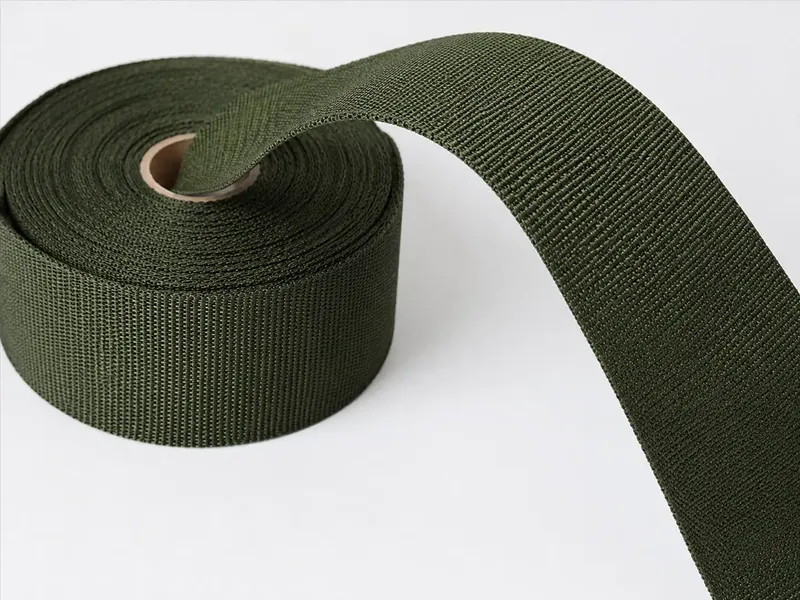
Heavy Duty Polyester Webbing
Industrial-grade polyester webbing designed for heavy-load applications and demanding outdoor environments.
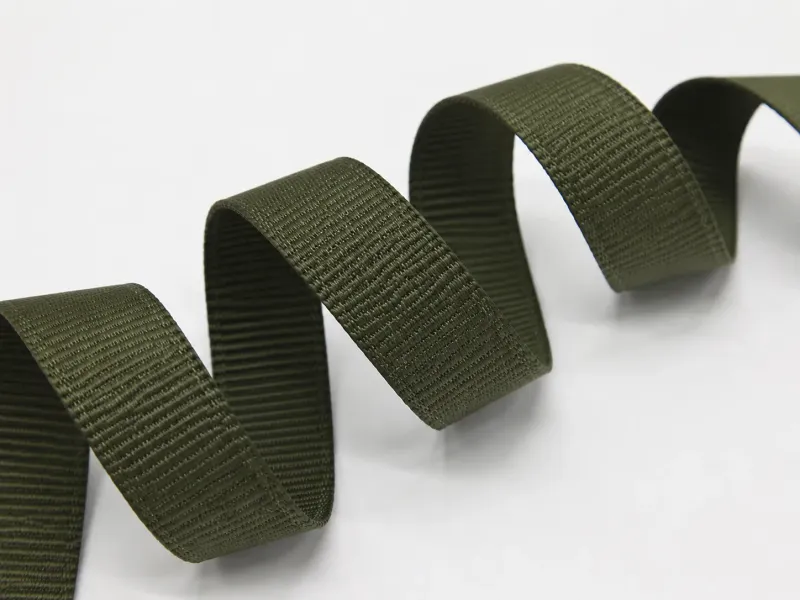
Outdoor Polyester Webbing
Weather-resistant polyester webbing engineered for outdoor gear and adventure equipment.
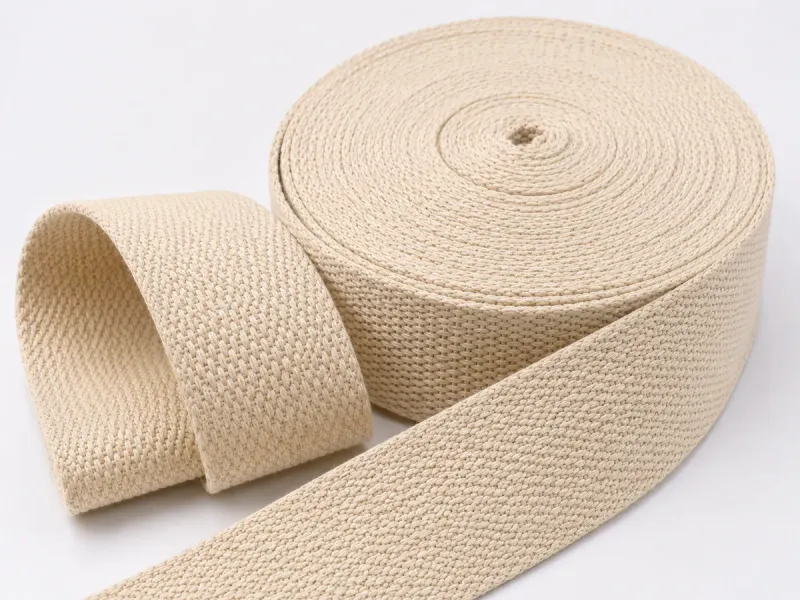
Heavy Duty Cotton Webbing
Durable heavy-duty cotton webbing designed for furniture, bags and industrial applications.
Related Categories
Related Applications
Related Industries
Which webbing material delivers superior longevity for your application?
Request a Webbing Material Consultation