When lives depend on equipment performance, mil-spec polyester webbing certification isn't optional—it's mission-critical. For tactical gear manufacturers supplying defense, law enforcement, and security sectors globally, understanding military specification requirements and third-party certification processes ensures your webbing components meet stringent performance thresholds. As of 2026, compliance with standards like MIL-W-27265 and MIL-DTL-32439 remains the benchmark for tactical webbing used in load-bearing equipment, harness systems, and field gear serving military and first-responder applications across North America, Europe, and allied export markets.
Understanding Mil-Spec Certification Requirements
Core Military Specifications for Polyester Webbing
Mil-spec certification for polyester webbing in tactical applications centers on two primary standards:
- MIL-W-27265D: Covers webbing construction, material composition, tensile strength (minimum 6,000 lbs for Type II 2-inch width), abrasion resistance, and colorfastness for general-purpose tactical use
- MIL-DTL-32439: Specifies requirements for parachute and life-support webbing with enhanced breaking strength thresholds exceeding 8,000 lbs and strict elongation limits under 15% at break
- Berry Amendment Compliance: For U.S. military procurement, webbing must be manufactured from 100% domestically sourced polyester fiber and woven in certified facilities
Our production batches targeting mil-spec compliance undergo pre-certification testing to verify conformance before third-party validation. Compared to commercial-grade polyester webbing, mil-spec certified material demonstrates approximately 40% higher tensile retention after 500 hours of accelerated UV exposure and maintains structural integrity through temperature cycling from -40°F to +160°F.
Material and Construction Standards
Certification testing evaluates multiple performance parameters:
| **Test Parameter** | **MIL-W-27265 Requirement** | **Typical Production Range** |
| Breaking Strength (1" width) | ≥3,000 lbs | 3,200–3,600 lbs |
| Breaking Strength (2" width) | ≥6,000 lbs | 6,400–7,200 lbs |
| Elongation at Break | 10–25% | 14–22% |
| Abrasion Resistance (cycles) | ≥5,000 cycles | 6,500–8,000 cycles |
| Water Absorption | <5% by weight | 2.8–4.2% |
| UV Retention (500 hrs) | ≥80% strength | 82–88% |
We test every production lot using Instron universal testing machines calibrated to ASTM D-5034 standards. Each certified batch includes full material traceability documentation linking fiber lot numbers to weaving records and test reports.
Certification Process and Third-Party Validation
Accredited Testing Laboratory Requirements
Mil-spec certification requires validation by ISO/IEC 17025 accredited laboratories with specific scope coverage for textile testing. The certification pathway typically follows this structure:
- Initial Type Testing: Submit representative samples (minimum 50 meters per specification variant) to accredited lab for full battery of mechanical, environmental, and durability tests
- Qualification Testing: Production lots undergo subset testing (breaking strength, width tolerance ±0.5mm, thread count verification) on a per-batch basis
- Periodic Re-certification: Annual re-testing of 3 production batches to maintain certified supplier status
- Compliance Documentation: Maintain Certificate of Conformance (C of C) records linking each shipped lot to specific test report numbers
We maintain partnership relationships with NVLAP-accredited textile testing facilities in both the U.S. and EU to support export certifications. Our internal QC lab performs 100% incoming fiber inspection and in-process width/thickness monitoring at 15-minute intervals during production runs, catching deviations before they reach third-party testing stages.
Certification Timelines and Costs
From sample submission to certification report issuance, expect the following timeline for new product qualification:
| **Certification Phase** | **Duration** | **Key Deliverable** |
| Initial Lab Testing | 3–4 weeks | Full test report with pass/fail per specification |
| Documentation Review | 1–2 weeks | Certificate of Conformance issued |
| Production Qualification | 2–3 weeks | First production lot validation |
| **Total to Market** | **6–9 weeks** | Certified material available for order |
For tactical gear manufacturers working on contract timelines, we recommend initiating certification 90 days before required production start dates to accommodate potential re-testing if initial samples require formulation adjustments.
Tactical Applications and Performance Requirements
Mission-Critical Use Cases
Certified mil-spec polyester webbing serves as the structural backbone for tactical equipment where failure isn't acceptable:
- Load-Bearing Vests and Plate Carriers: 2-inch webbing with 6,500+ lbs breaking strength supports ceramic armor plates and mission-essential equipment totaling 40–60 lbs distributed load
- Rappelling and Fast-Rope Harnesses: Tubular construction webbing meeting MIL-DTL-32439 withstands dynamic loads during rapid descent operations
- Equipment Attachment Systems (MOLLE/PALS): 1-inch webbing strips spaced at 1.5-inch intervals provide modular attachment points meeting 3,000 lbs minimum strength per connection
- Parachute Harness Components: Life-support rated webbing with 8,000+ lbs capacity and certified elongation limits ensures jumper safety during canopy deployment shock loads
Our Heavy Duty Polyester Webbing and Mil-Spec Nylon Webbing product lines are engineered specifically for these demanding applications, with production capabilities from 25mm to 100mm widths and tensile ratings spanning 2,000 to 10,000 lbs depending on construction.
Environmental Performance Standards
Tactical operations span extreme environmental conditions. Certified webbing must maintain performance across:
| **Environmental Factor** | **Test Requirement** | **Performance Threshold** |
| Temperature Range | -40°F to +160°F exposure | <10% strength degradation |
| UV Exposure | 500 hours xenon arc | ≥80% tensile retention |
| Salt Fog Resistance | 250 hours ASTM B117 | No structural degradation |
| Mildew Resistance | AATCC 30 Test III | Rating 0–1 (no growth) |
| Water Immersion | 72 hours submersion | <5% strength loss |
We validate environmental performance through accelerated aging protocols that simulate 3 years of field exposure in 6-week test cycles. Unlike commercial webbing that may degrade 20-30% under similar stress testing, our mil-spec certified production maintains 85-92% of original tensile properties.
Compliance Documentation and Traceability
Required Documentation Package
Defense contractors and tactical gear manufacturers require comprehensive documentation to satisfy end-customer audit requirements:
- Certificate of Conformance (C of C): Signed declaration that production lot meets specified mil-spec standard, referencing test report numbers and batch traceability codes
- Third-Party Test Reports: Complete laboratory reports from accredited facilities showing all tested parameters and pass/fail status
- Material Certifications: Fiber manufacturer certifications confirming polyester resin lot numbers, denier specifications, and country of origin
- Production Records: Weaving parameters including warp/weft thread counts (typically 20-24 ends per inch for tactical weight webbing), loom tension settings, and heat-set temperatures
- First Article Inspection (FAI): Dimensional verification report confirming width (±0.5mm tolerance), thickness (±0.2mm tolerance), and edge finish quality
Every shipped order includes a unique lot number laser-etched on packaging that links to our internal quality management system. This provides end-to-end traceability from raw fiber procurement through final inspection, critical for government contract compliance audits.
Ongoing Compliance Maintenance
Maintaining mil-spec certification status requires continuous quality monitoring:
- Statistical Process Control (SPC): Real-time monitoring of 12 critical parameters during weaving, with automated alerts when measurements drift beyond ±2 sigma control limits
- Quarterly Surveillance Testing: Random selection of 5% of production lots for full third-party re-testing to verify ongoing conformance
- Corrective Action Protocols: Documented procedures for addressing non-conformances, including root cause analysis and preventive measures implemented within 48 hours of detection
- Supplier Audits: Annual certification body audits of manufacturing facility, quality systems, and calibration records
We archive quality records for 10 years per ISO 9001 requirements, ensuring documentation availability for long-lifecycle military programs where spare parts and replacement components may be sourced years after initial equipment fielding.
Sourcing Certified Mil-Spec Webbing
Production Capabilities and Lead Times
Our mil-spec certified webbing production lines serve the Military & Tactical Industry and Safety Protection Industry with flexible manufacturing capacity:
- Standard Widths: 1-inch, 1.5-inch, and 2-inch (most common for tactical applications) available from stock
- Custom Specifications: Widths from 25mm to 100mm, custom colors to match uniform systems (tan 499, coyote brown, ranger green, black), and specialty treatments (IR reflective, water repellent)
- Minimum Order Quantities: 1,000 meters per specification for certified production runs; prototype/sample quantities of 50-100 meters available for qualification testing
- Production Lead Time: 4-6 weeks from PO to shipment for certified lots, including in-process QC testing and documentation preparation
For urgent tactical program requirements, we maintain strategic inventory of 2-inch OD green and coyote brown certified webbing in 5,000-meter rolls for rapid deployment, typically shipping within 7-10 business days of order confirmation.
Specification Support and Engineering Consultation
Navigating mil-spec requirements for first-time tactical gear development can be complex. Our technical team provides:
- Specification Selection Guidance: Recommending appropriate mil-spec standards (MIL-W-27265 vs. MIL-DTL-32439) based on end-use load requirements and safety classification
- Testing Coordination: Managing third-party laboratory submissions, interpreting test results, and addressing non-conformance issues
- Design Optimization: Suggesting webbing construction modifications to meet strength targets while minimizing weight (critical for reducing soldier load)
- Berry Amendment Compliance Verification: Providing full material traceability documentation to support DFARS compliance for U.S. military contracts
We work alongside product development teams from concept through production, ensuring webbing specifications align with overall system requirements. For applications requiring enhanced performance beyond standard polyester, our Military Aramid Webbing and UHMWPE Tactical Webbing options provide 2-3x strength-to-weight ratio improvements compared to polyester mil-spec webbing.
Frequently Asked Questions
What is the difference between MIL-W-27265 and MIL-DTL-32439 certifications?
MIL-W-27265 covers general-purpose tactical webbing for equipment attachment, load carriage, and non-life-support applications with breaking strength requirements ranging from 3,000 lbs (1-inch) to 6,000+ lbs (2-inch). MIL-DTL-32439 specifies higher-performance webbing for parachute harnesses, rappelling equipment, and life-support systems with enhanced strength thresholds exceeding 8,000 lbs and stricter elongation limits under 15%. Choose MIL-DTL-32439 when human life directly depends on webbing integrity; MIL-W-27265 suffices for equipment-mounting applications.
How long does mil-spec certification take for a new webbing specification?
Initial certification for a new webbing construction requires 6-9 weeks from sample submission to production-ready status. This includes 3-4 weeks for third-party laboratory testing, 1-2 weeks for documentation review and Certificate of Conformance issuance, and 2-3 weeks for first production lot qualification. For time-critical programs, we recommend initiating the certification process at least 90 days before required production start dates to accommodate potential formulation adjustments or re-testing.
What minimum order quantity is required for certified mil-spec webbing?
Standard MOQ for certified production runs is 1,000 meters per specification variant. For prototype development and qualification testing, we offer reduced quantities of 50-100 meters to support initial product validation before committing to full production volumes. Strategic inventory items in common tactical colors (OD green, coyote brown, black) in 2-inch width may be available in smaller cut lengths from stock for rapid prototyping needs.
Does certified webbing require re-testing for each production lot?
Once a webbing specification achieves initial type approval, ongoing production lots undergo qualification testing rather than full certification testing. This subset testing verifies breaking strength, dimensional tolerances (±0.5mm width, ±0.2mm thickness), and thread count consistency for each batch. Full third-party re-testing is performed quarterly on randomly selected lots (5% of production) and annually as part of supplier certification maintenance. Each shipped lot includes a Certificate of Conformance linking to the relevant test report numbers.
Can polyester webbing meet Berry Amendment requirements for U.S. military contracts?
Yes, when manufactured from domestically sourced polyester fiber and woven in qualifying facilities. Berry Amendment compliance requires 100% U.S.-origin materials and domestic production for certain defense procurement categories. We provide complete material traceability documentation including fiber manufacturer certifications confirming country of origin, enabling tactical gear manufacturers to satisfy DFARS compliance requirements. For export-oriented programs serving allied militaries outside Berry Amendment scope, we offer equivalent mil-spec certified production using globally sourced materials at competitive pricing.
Related Resources
Related Products (4)
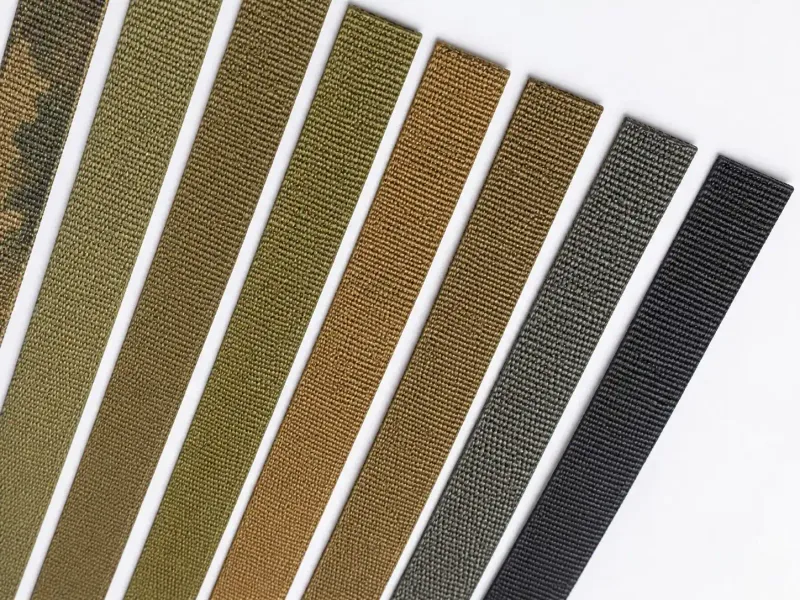
Mil-Spec Nylon Webbing
Military-grade nylon webbing engineered for tactical equipment, load-bearing systems and defense applications.
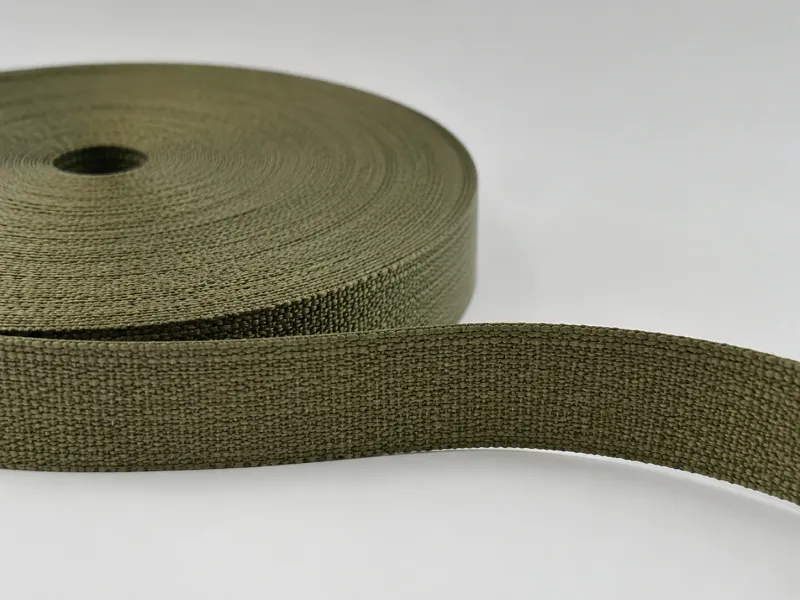
Military Aramid Webbing
Military-grade aramid webbing for tactical systems, load-bearing equipment and defense applications.
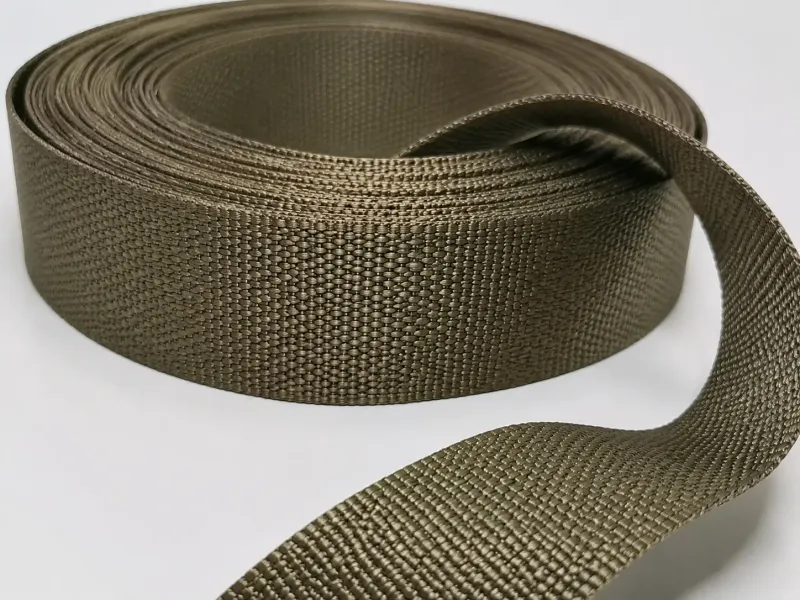
UHMWPE Tactical Webbing
Military-grade UHMWPE webbing for tactical equipment and mission-critical load-bearing systems.
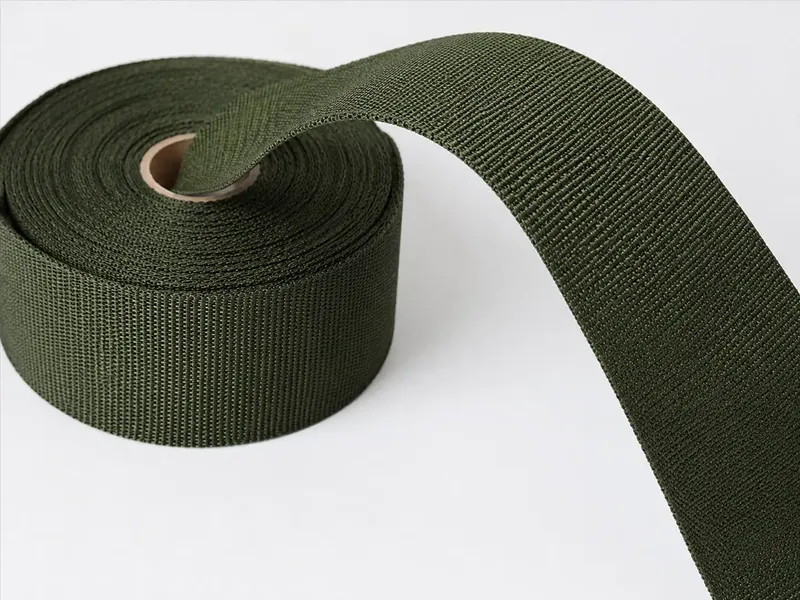
Heavy Duty Polyester Webbing
Industrial-grade polyester webbing designed for heavy-load applications and demanding outdoor environments.
Related Applications
Related Industries
Military-grade certification standards and compliance for tactical applications
Request Mil-Spec Certification Documentation