When a soldier's kit, a law enforcement officer's duty belt, or a rescue team's rigging depends on a single length of strapping, the material specification is not a detail — it is a critical safety parameter. Mil-spec nylon web strapping certification defines the precise construction, tensile performance, and dimensional tolerances that separate field-ready tactical components from off-the-shelf alternatives. As of 2026, procurement teams sourcing for military, defense contractor, and tactical gear manufacturing applications consistently specify MIL-W-4088 or equivalent standards to ensure interoperability and load-bearing reliability across platforms. This page covers the core certification requirements, performance benchmarks, and selection criteria for mil-spec nylon web strapping intended for tactical use — drawing directly from our production experience manufacturing for export to North America, Europe, and global defense supply chains.
Understanding Mil-Spec Certification for Nylon Web Strapping
What Mil-Spec Means for Nylon Webbing
Military specifications (mil-spec) are detailed technical standards published by the U.S. Department of Defense that define minimum acceptable performance, construction, and testing requirements for materials used in defense and tactical applications. For nylon web strapping, the primary governing document is MIL-W-4088, which covers tubular and flat nylon webbing used in parachute harnesses, load-bearing equipment (LBE), body armor carriers, and general-purpose tactical rigging.
Key Parameters Defined by Mil-Spec Standards
- Material: High-tenacity nylon (Type 6 or Type 6,6 polyamide) with a minimum yarn denier appropriate to the webbing class
- Width tolerance: Typically ±1.6mm (1/16 inch) from nominal width across the 25–100mm range
- Tensile strength: Minimum breaking strength varies by class — Class I at 4,000 lbs, Class II at 6,000 lbs, Class III at 7,000 lbs for flat webbing
- Elongation at break: Maximum 40% for most tactical classes to prevent energy-absorbing stretch under dynamic load
- Weight per yard: Controlled to ensure consistent fiber density across the full production run
- Color fastness: Must meet fade resistance requirements after UV and laundering exposure
Comparison: Mil-Spec vs. Commercial-Grade Nylon Webbing
| Property | Mil-Spec Nylon Webbing | Standard Commercial Nylon |
| Tensile strength (25mm) | ≥ 4,000 lbs (Class I) | 1,500–2,500 lbs typical |
| Width tolerance | ±1.6mm | ±3mm or looser |
| Yarn denier specification | Controlled per class | Variable by manufacturer |
| UV & launder color fastness | Tested to DOD standard | Not routinely tested |
| Documentation | Full test report & CoC | Certificate of conformance optional |
| Lot traceability | Mandatory | Rarely enforced |
For tactical procurement, the gap between mil-spec and commercial grade is operationally significant. A 25mm commercial strap rated at 2,000 lbs will fail under the same dynamic load that a mil-spec Class I strap handles within spec — roughly a 60–100% margin difference in real-world breaking strength.
Tactical Applications and Load-Bearing Requirements
Where Mil-Spec Nylon Strapping Is Used in Tactical Gear
Certified nylon web strapping is the structural backbone of a wide range of
platforms. Our production batches regularly supply webbing for the following application categories:
- Plate carriers and body armor vests: Shoulder and cummerbund straps typically use 50mm or 38mm flat nylon webbing rated to Class II (≥ 6,000 lbs) to support the distributed weight of ceramic or steel plate inserts averaging 15–30 lbs per kit
- Load-bearing equipment (MOLLE/PALS systems): 25mm webbing woven at 5 rows per 38mm panel is the current NATO-compatible standard; tensile verification is performed per attachment point
- **
systems for tactical rappelling: 45–50mm flat nylon rated to a minimum 5,000 lbs** static load with dynamic shock-absorption characteristics
- Sling systems and weapon retention: 38mm one-point and two-point slings using high-tenacity nylon with a working load limit (WLL) of at least 1,200 lbs
- Ruck and pack frame strapping: Shoulder yoke and hip belt webbing in 50–75mm widths, where long-term creep resistance under a 60–100 lb sustained load is the critical design parameter
Width and Strength Reference Chart
| Nominal Width | Typical Mil-Spec Class | Min. Breaking Strength | Common Tactical Use |
| 25mm (1 in) | Class I | 4,000 lbs | MOLLE webbing, retention loops |
| 38mm (1.5 in) | Class II | 6,000 lbs | Weapon slings, pack straps |
| 50mm (2 in) | Class III | 7,000 lbs | Body armor, harness main |
| 75mm (3 in) | Heavy Duty | 8,000–10,000 lbs | Frame pack hip belt, vehicle tie-down |
Our
is produced across the full 25–100mm width range with tensile performance from 3,000 to 10,000 lbs, covering all standard tactical deployment scenarios.
Certification Testing and Quality Verification Process
How Mil-Spec Certification Testing Works
Certification is not a single document — it is a process that begins at raw material intake and ends with a traceable test report shipped with each lot. For nylon web strapping destined for tactical use, the standard testing protocol includes:
Required Physical Tests
- Breaking tensile strength: Samples pulled to failure on a universal testing machine (UTM) using a 12-inch gauge length, jaw separation rate of 12 inches per minute; minimum of 5 specimens per lot
- Width measurement: Measured unstretched at 5 points along a 1-meter sample; must fall within ±1.6mm of nominal
- Weight per linear yard: Controlled to ±5% of specification weight to ensure consistent fiber density
- Loop strength: For sewn or looped terminations, peel and shear loads tested to 150% of rated WLL
- Elongation at break: Measured concurrently with tensile; maximum 40% for standard flat tactical webbing
- Abrasion resistance: Wet and dry abrasion cycles per ASTM D4966 or equivalent; mil-spec grades must sustain >500 cycles without structural fiber loss
Environmental and Chemical Tests
- UV weathering: 200-hour xenon-arc exposure per ASTM G155; color change ΔE ≤ 3.0, tensile retention ≥ 80%
- Hydrolysis resistance: Immersion in water at 70°C for 24 hours; tensile retention ≥ 85% of dry value
- Salt spray: 48-hour neutral salt fog per ASTM B117, relevant for hardware-attached strapping assemblies
Documentation Package
Each production lot of certified mil-spec nylon webbing ships with:
- Certificate of Conformance (CoC) stating the applicable specification and lot number
- Full tensile test report with raw data per specimen
- Material composition declaration (nylon type, denier, weave structure)
- Colorfastness and UV test summary
- Lot traceability back to raw yarn batch
Compared to commercial webbing suppliers who often provide only a single-page data sheet, this documentation package reduces incoming inspection time for defense contractors by roughly 40–50% and supports qualification audits without additional supplier visits.
Material Science: Why High-Tenacity Nylon Outperforms Alternatives for Tactical Strapping
Nylon vs. Other Webbing Materials in Tactical Environments
High-tenacity nylon (polyamide 6,6) has been the dominant fiber for load-bearing tactical webbing since the 1950s, and as of 2026 it remains the material of choice for most mil-spec applications. The reasons are grounded in measurable material properties:
| Property | High-Tenacity Nylon | Polyester | Polypropylene | UHMWPE |
| Tenacity (g/denier) | 8.5–9.5 | 8.0–9.0 | 6.0–7.5 | 28–40 |
| Elongation at break | 15–28% | 10–15% | 20–40% | 2–4% |
| Moisture absorption | ~4% | ~0.4% | <0.1% | <0.01% |
| Abrasion resistance | Excellent | Good | Moderate | Very High |
| UV resistance (unprotected) | Moderate | Good | Poor | Good |
| Energy absorption (dynamic load) | High | Moderate | Low | Low |
| Mil-spec precedent | Extensive | Limited | None | Emerging |
Key tactical advantage of nylon: The 15–28% elongation at break provides significant energy absorption during dynamic shock loading — the kind generated when a rappelling soldier suddenly arrests a fall, or when a vehicle tie-down strap hits its peak load. Polyester is stiffer (lower elongation), which can transfer more shock force to hardware and anchor points. UHMWPE has near-zero elongation, making it excellent for static lifting but less ideal for human load-bearing harness systems.
Nylon Moisture Behavior in Field Conditions
Nylon absorbs up to 4% of its weight in moisture, which causes a measurable reduction in tensile strength — typically 10–15% wet vs. dry. Mil-spec certification accounts for this by testing wet tensile retention and setting minimum thresholds. Field-deployed gear is always rated to the wet-state value, so published WLL figures already incorporate this margin. This is a factual property, not a limitation that disqualifies nylon — it is precisely why the elongation and energy-absorption characteristics are valued by harness and LBE designers.
For applications where moisture absorption must be near zero, our
offers an alternative with military-grade construction and essentially zero moisture uptake, though it is specified to different performance parameters than classic MIL-W-4088 nylon webbing.
Sourcing Mil-Spec Nylon Webbing at Wholesale and OEM Scale
Wholesale and OEM Supply for Defense and Tactical Manufacturers
We supply mil-spec nylon web strapping at bulk and OEM scale to defense contractors, tactical gear brands, and government procurement agents across North America, Europe, and export markets globally. Our production capabilities for
customers include:
Production Specifications
- Width range: 25mm to 100mm flat nylon webbing, all mil-spec classes
- Tensile strength range: 3,000 to 10,000 lbs breaking strength depending on width and class
- Standard colors: Coyote Brown (CB), Ranger Green (RG), MultiCam-compatible Tan, Olive Drab (OD), Black, and Wolf Grey — all dyed to color-fastness standards
- Custom colors: Pantone-matched dyeing available on OEM orders
- Construction options: Flat woven, tubular (for
applications), and jacquard-woven patterns via
- MOQ: Standard mil-spec runs from 500 meters per color/width SKU for catalog items; custom specifications from 2,000 meters
- Spool formats: 100m, 200m, 500m spools, or bulk rolls to 1,000m for cutting-room operations
Quality Documentation for Procurement Compliance
Every bulk shipment includes a full documentation package suitable for defense contractor supplier qualification:
- Lot-traceable Certificate of Conformance
- Third-party or in-house tensile test data per ASTM or MIL standard
- Material safety data sheet (MSDS/SDS)
- Country of origin declaration for customs and ITAR/EAR compliance screening
Complementary Tactical Webbing Products
For procurement teams specifying a full kit, we also manufacture:
-
(2,000–8,000 lbs, 25–100mm) for non-mil-spec but high-performance applications
-
(20–75mm, MIL-SPEC construction) for high-temperature or blast-exposure environments where nylon's melting point of ~260°C is insufficient
-
full collection for non-tactical nylon strapping needs
Frequently Asked Questions
What is MIL-W-4088 and does it apply to all mil-spec nylon webbing for tactical use?
MIL-W-4088 is the primary U.S. Department of Defense specification covering nylon webbing used in parachute, harness, and load-bearing equipment. It defines minimum tensile strength by class (Class I: 4,000 lbs; Class II: 6,000 lbs; Class III: 7,000 lbs for flat webbing), dimensional tolerances, weight per yard, and elongation limits. Not all mil-spec nylon webbing for tactical use falls under MIL-W-4088 specifically — some applications reference MIL-W-17337 (utility tape) or program-specific requirements documents. When sourcing, always confirm the exact specification number applicable to your end use, and request a Certificate of Conformance and test report that explicitly references that document.
How do I verify that a nylon webbing supplier's mil-spec certification is legitimate?
Legitimate mil-spec certification requires a traceable lot number, a Certificate of Conformance (CoC) that names the specific MIL standard, actual test data (not just a claim on a data sheet), and documentation of the testing methodology (ASTM or MIL test method references). Request the raw tensile test report showing individual specimen values — not just a summary average. Verify that the width, weight per yard, and breaking strength figures on the CoC match the specification tables in the referenced MIL document. A supplier who cannot provide lot-level documentation should not be sourcing material for tactical load-bearing applications.
Can mil-spec nylon webbing be used in MOLLE/PALS systems?
Yes. The MOLLE (Modular Lightweight Load-carrying Equipment) and PALS (Pouch Attachment Ladder System) standards specify 25mm (1-inch) nylon webbing woven at 5 columns per 38mm of panel width. The webbing used must meet minimum tensile requirements consistent with MIL-W-4088 Class I or equivalent (≥ 4,000 lbs breaking strength) to ensure attachment points hold under field loading. Our Mil-Spec Nylon Webbing is produced in 25mm widths to 3,000–10,000 lbs tensile range and is suitable for MOLLE/PALS panel construction, subject to your program-specific qualification testing.
What is the difference between flat and tubular mil-spec nylon webbing for tactical applications?
Flat mil-spec nylon webbing is a single-layer woven construction used for load-bearing straps, slings, and harness components where stiffness and predictable elongation are required. Tubular nylon webbing is a hollow, cylindrically woven construction that distributes load across two layers of material, providing energy absorption and flexibility — commonly used in climbing, rappelling, and personal retention systems. For most MOLLE, body armor, and equipment strap applications, flat webbing is specified. Tubular constructions are preferred where the strap must conform to body contours or where knotting and hardware threading is required. Both types can be produced to mil-spec tensile standards.
Is nylon or UHMWPE webbing better for tactical and military load-bearing use?
The choice depends on the specific loading profile. High-tenacity nylon with its 15–28% elongation at break provides superior energy absorption for dynamic loading scenarios — falls, shock loads, sudden arrests — and has decades of mil-spec precedent under MIL-W-4088. UHMWPE webbing offers significantly higher tenacity (28–40 g/denier vs. 8.5–9.5 for nylon), near-zero moisture absorption, and lighter weight, making it valuable for static lifting and marine environments. However, UHMWPE's very low elongation (2–4%) can transfer more shock energy to hardware and anchor points in dynamic applications. For current tactical harness, body armor, and MOLLE systems, high-tenacity nylon remains the standard. UHMWPE Tactical Webbing is increasingly specified for specialized applications where weight reduction or moisture resistance takes priority.
Related Resources
Related Products (4)
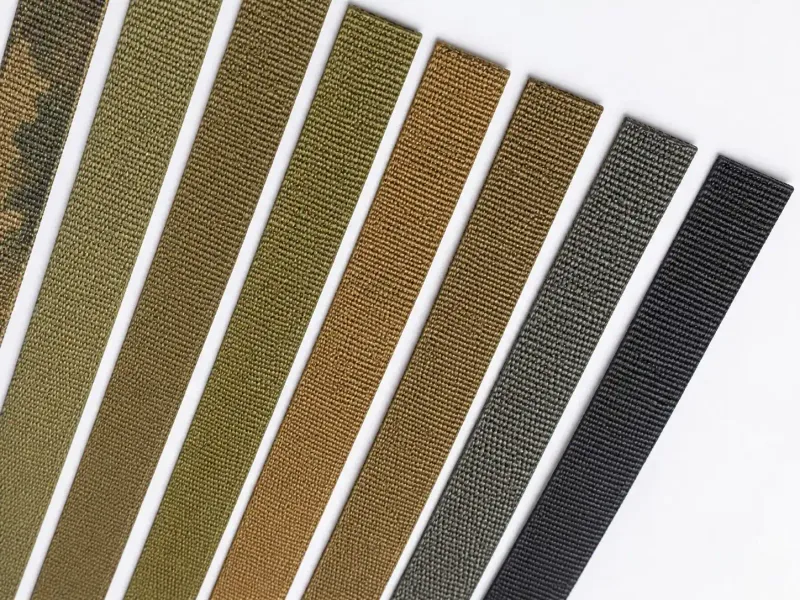
Mil-Spec Nylon Webbing
Military-grade nylon webbing engineered for tactical equipment, load-bearing systems and defense applications.
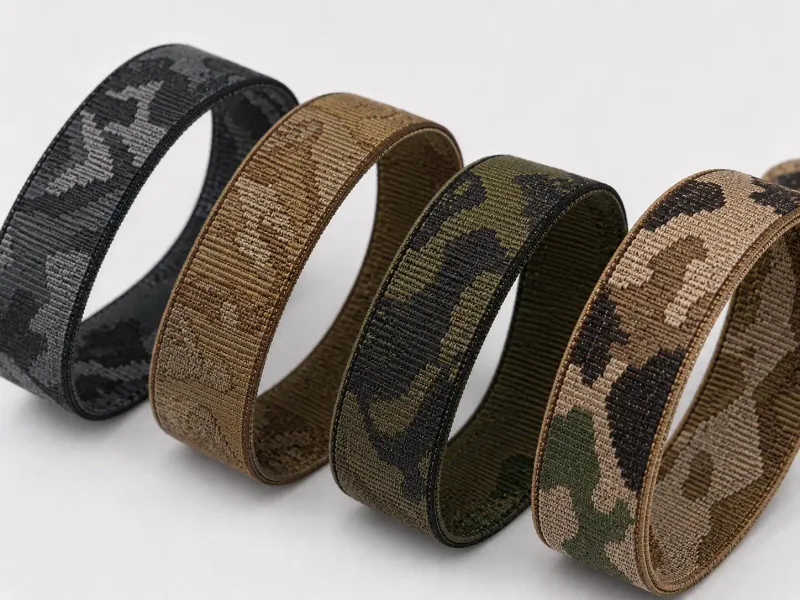
Tactical Jacquard Webbing
Military-grade jacquard webbing designed for tactical equipment, gear systems and defense applications.
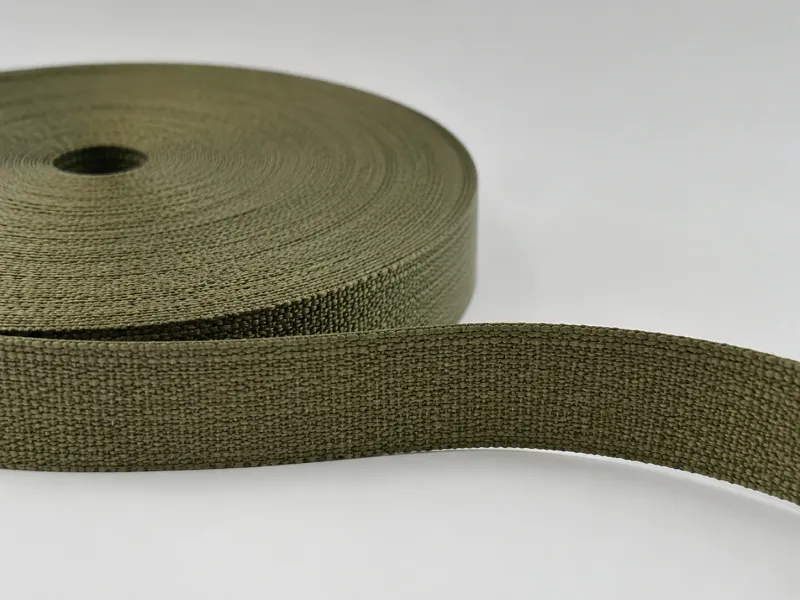
Military Aramid Webbing
Military-grade aramid webbing for tactical systems, load-bearing equipment and defense applications.
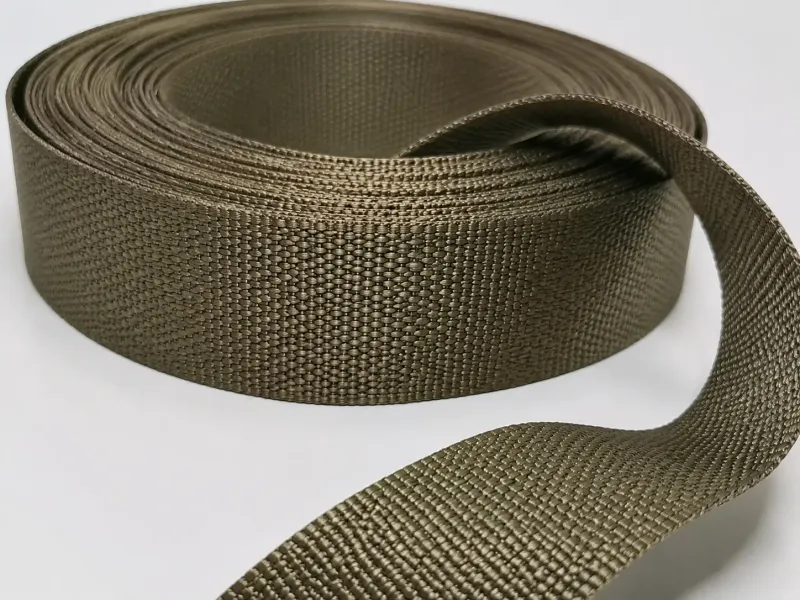
UHMWPE Tactical Webbing
Military-grade UHMWPE webbing for tactical equipment and mission-critical load-bearing systems.
Related Applications
Related Industries
Export-quality, MIL-SPEC certified nylon webbing engineered for military, law enforcement, and tactical gear applications
Request a Mil-Spec Nylon Webbing Bulk Quote