Industrial webbing belts are woven from high-performance synthetic and natural fibers selected for specific load-bearing, environmental, and application requirements. The base material—polyester, nylon, polypropylene, aramid, UHMWPE, cotton, or elastic blends—determines tensile strength, UV resistance, temperature tolerance, and chemical compatibility. Understanding material composition ensures you specify the right webbing for safety-critical applications like lifting slings, cargo tie-downs, safety harnesses, and industrial strapping. This guide breaks down what industrial webbing is actually made of, comparing fiber properties with real-world performance data.
Core Fiber Materials in Industrial Webbing
Industrial webbing construction starts with fiber selection. As of 2026, the most common base materials are polyester, nylon, polypropylene, aramid (Kevlar/Nomex), UHMWPE (ultra-high molecular weight polyethylene), cotton, and elastic blends. Each fiber delivers distinct mechanical and environmental properties.
Polyester Fiber Composition
Polyester (PET) webbing is woven from polyethylene terephthalate filament yarn. We use high-tenacity polyester with tensile strengths ranging from 2,000 to 10,000 lbs depending on width and weave density. Polyester exhibits minimal stretch under load (typically 3-5% elongation at break), excellent UV resistance, and near-zero moisture absorption. Heavy Duty Polyester Webbing in our catalog spans 25-100mm widths and is the workhorse for cargo straps and industrial tie-downs. Compared to nylon, polyester maintains strength when wet and resists UV degradation roughly 40% better in outdoor applications.
Nylon Fiber Composition
Nylon (polyamide 6 or 6.6) webbing is manufactured from high-tenacity nylon multifilament yarn. Nylon offers higher elongation (15-30% at break) than polyester, providing shock-absorption properties critical for dynamic loads. Our Heavy Duty Nylon Webbing delivers 2,000-8,000 lbs tensile strength across 25-100mm widths. Nylon absorbs approximately 4-8% moisture by weight, which can reduce strength by 10-15% when saturated. However, this elasticity makes nylon ideal for safety harnesses and climbing applications where energy absorption is required. Mil-Spec Nylon Webbing meets military specifications with 3,000-10,000 lbs tensile ratings for tactical gear and load-bearing equipment.
Polypropylene Fiber Composition
Polypropylene (PP) webbing is extruded from thermoplastic polypropylene resin. It is the lightest synthetic fiber used in webbing, with a specific gravity of 0.91 (floats on water). Heavy Duty Polypropylene Webbing provides 800-5,000 lbs tensile strength in 20-100mm widths. Polypropylene is chemically inert, resists acids and alkalis, and absorbs virtually no water. However, untreated PP degrades rapidly under UV exposure. Our Colorfast Polypropylene Webbing incorporates UV stabilizers for enhanced outdoor performance. Marine Polypropylene Webbing is the standard for boat rigging and aquatic applications due to its buoyancy and zero water absorption.
Aramid Fiber Composition
Aramid webbing is woven from para-aramid (Kevlar) or meta-aramid (Nomex) fibers. These aromatic polyamide materials deliver exceptional heat resistance and cut resistance. Industrial Aramid Webbing operates continuously from -50°C to 500°C with widths from 20-150mm. Aramid has a tensile strength-to-weight ratio roughly five times higher than steel. Heat Resistant Aramid Webbing is specified for furnace curtains, welding blankets, and high-temperature industrial processes. Aramid does not melt but chars at extreme temperatures. Flame Retardant Aramid Webbing exceeds LOI (Limiting Oxygen Index) of 28%, self-extinguishing in most environments.
UHMWPE Fiber Composition
UHMWPE (Dyneema/Spectra) webbing is manufactured from ultra-high molecular weight polyethylene fiber with a molecular weight exceeding 3 million g/mol. UHMWPE Lifting Sling Webbing delivers 10,000-50,000 lbs tensile strength in 25-150mm widths while weighing approximately 40% less than equivalent polyester webbing. UHMWPE floats, resists abrasion, and maintains strength in wet conditions. However, it has a low melting point (~145°C) and poor UV resistance without treatment. Heavy Duty UHMWPE Webbing is the preferred choice for rigging, lifting, and marine applications where weight reduction and chemical resistance are critical.
Cotton and Elastic Fiber Blends
Cotton webbing is woven from natural cotton fibers, offering softness and breathability for applications requiring skin contact. Heavy Duty Cotton Webbing provides 20-100mm widths with 1.2-3.5mm thickness. Cotton absorbs moisture, is biodegradable, and can be dyed easily. Elastic webbing blends polyester or nylon with spandex, latex, or rubber cores. Woven Elastic Webbing achieves 60-120% stretch rate in 20-100mm widths, while Knitted Elastic Webbing stretches 100-180% for apparel and medical applications.
Webbing Construction Methods and Weave Patterns
The manufacturing process and weave structure significantly impact webbing performance beyond base fiber properties. Industrial webbing is produced on needle looms or shuttle looms using plain weave, twill weave, or jacquard weave patterns.
Plain Weave vs. Twill Weave
Plain weave alternates warp and weft yarns in a simple over-under pattern, creating a balanced, tight fabric with minimal stretch. Twill weave uses a diagonal interlacing pattern (2/1 or 3/1 twill), producing a softer, more flexible webbing with slightly higher elongation. We manufacture plain weave webbing for maximum dimensional stability in cargo tie-downs and twill weave for comfort-critical applications like safety harnesses and pet collars. Herringbone Cotton Webbing uses a distinctive V-shaped twill variant for decorative and fashion applications.
Tubular Webbing Construction
Tubular webbing is woven as a continuous tube rather than a flat strip. Tubular Nylon Webbing (16-50mm widths) is the standard for climbing slings and rescue equipment because the tubular construction distributes load more evenly and resists edge abrasion. Tubular Polypropylene Webbing is used for marine applications where the hollow core provides additional buoyancy.
Jacquard Weave for Custom Patterns
Jacquard looms allow complex multi-color patterns, logos, and text to be woven directly into the webbing structure. Logo Jacquard Webbing (15-100mm widths) integrates branding without printing or embroidery. Tactical Jacquard Webbing uses high-tenacity nylon with woven MOLLE patterns for military load-bearing equipment. Compared to printed webbing, jacquard construction ensures logos won't fade or peel—a critical advantage for branded outdoor gear and promotional products.
Post-Weaving Treatments
Raw webbing undergoes finishing processes to enhance performance. Heat-setting stabilizes synthetic webbing to prevent shrinkage. UV stabilizers are applied to polypropylene and polyester to extend outdoor life. Silicone coatings create Non-Slip Elastic Webbing for anti-slip grips. Reflective threads or films are integrated into Reflective Polyester Webbing and Reflective Nylon Webbing (15-50mm widths) for high-visibility safety applications. We batch-test every production run for dimensional accuracy, colorfastness (AATCC standards), and tensile compliance.
Material Selection by Application Requirements
Choosing the correct webbing material depends on the end-use environment and performance criteria. Here's how we match fiber types to common industrial and commercial applications based on real-world testing and customer feedback.
Lifting and Rigging Applications
Lifting slings require maximum strength-to-weight ratio and abrasion resistance. UHMWPE Lifting Sling Webbing is our top recommendation for overhead lifting, delivering 10,000-50,000 lbs working load limits while weighing roughly 40% less than polyester equivalents. For cost-sensitive applications, Heavy Duty Polyester Webbing provides reliable performance up to 10,000 lbs in 25-100mm widths. We proof-test sample batches to 200% of rated capacity before shipping.
Safety Harness and Fall Protection
Safety harnesses demand energy-absorbing properties to reduce peak arrest forces. Nylon's 15-30% elongation makes it the preferred material. UHMWPE Safety Harness Webbing and Aramid Safety Harness Webbing (45-50mm widths) are specified for extreme-temperature environments (oil rigs, foundries, arctic operations) where nylon would degrade. Aramid maintains integrity from -50°C to 500°C, critical for hot-work fall protection.
Automotive Seat Belt and Restraint Systems
Automotive seat belts require FMVSS-compatible webbing with precise elongation and load-extension curves. Seat Belt Polyester Webbing and Seat Belt Nylon Webbing (46-50mm standard widths) are manufactured to automotive specifications with controlled stretch characteristics. We maintain traceability records and batch certifications for every production lot to support OEM quality requirements.
Marine and Outdoor Gear
Marine applications require zero water absorption and UV resistance. Marine Polypropylene Webbing and UHMWPE Marine Webbing float, resist saltwater corrosion, and maintain strength when wet. For backpacks and outdoor gear, Outdoor Polyester Webbing (20-100mm widths) balances UV resistance, low moisture absorption, and colorfastness. Compared to untreated nylon, UV-stabilized polyester retains approximately 85% of original strength after 1,000 hours of accelerated weathering (ASTM G154).
Pet Products and Apparel
Pet collars and leashes require soft-hand feel, vibrant colors, and washability. Pet Polyester Webbing, Pet Nylon Webbing, and Pet Polypropylene Webbing (10-50mm widths) are dyed to custom Pantone colors with excellent colorfastness. For fashion accessories, Jacquard Elastic Webbing and Fold Over Elastic Webbing add stretch and custom patterns. We run colorfastness tests (ISO 105) to ensure products withstand repeated washing without fading.
Comparative Material Properties and Performance Data
Understanding how different fibers perform under identical conditions helps you specify the right material. The table below compares key properties across common webbing fibers based on our in-house testing and published material data.
Material Performance Comparison Table
| Fiber Type | Specific Gravity | Tensile Strength Range | Elongation at Break | UV Resistance | Moisture Absorption | Melting Point |
| **Polyester** | 1.38 | 2,000-10,000 lbs | 3-5% | Excellent | <0.4% | 260°C |
| **Nylon** | 1.14 | 2,000-10,000 lbs | 15-30% | Fair-Good | 4-8% | 215°C |
| **Polypropylene** | 0.91 | 800-5,000 lbs | 15-25% | Poor (untreated) | <0.1% | 165°C |
| **Aramid** | 1.44 | Very High | 2-4% | Excellent | 5-7% | 500°C+ (chars) |
| **UHMWPE** | 0.97 | 10,000-50,000 lbs | 3-5% | Poor (untreated) | <0.1% | 145°C |
| **Cotton** | 1.54 | Moderate | 7-10% | Poor | 7-10% | 210°C (scorches) |
Trade-Offs and Selection Criteria
Polyester vs. Nylon: Polyester maintains strength when wet and resists UV degradation, making it ideal for outdoor and marine tie-downs. Nylon's higher elongation provides better shock absorption for dynamic loads (safety harnesses, climbing). Cost is similar; the choice depends on whether you prioritize minimal stretch (polyester) or energy absorption (nylon).
Polypropylene vs. Polyester: Polypropylene costs approximately 15-25% less than polyester and floats, making it the default for marine and buoyancy applications. However, untreated PP degrades under UV in 6-12 months outdoors, compared to polyester's multi-year lifespan. UV-stabilized polypropylene narrows this gap but adds cost.
Aramid vs. UHMWPE: Aramid excels in high-temperature environments (furnaces, welding, firefighting) where UHMWPE would melt. UHMWPE offers superior strength-to-weight ratio for lifting and rigging at ambient temperatures. Aramid typically costs 2-3x more than UHMWPE for equivalent strength.
Natural vs. Synthetic: Cotton webbing is biodegradable, soft, and skin-friendly for pet products and apparel, but lacks the strength and weather resistance of synthetics. Cotton absorbs moisture, promoting mildew in humid conditions. For load-bearing or outdoor applications, synthetic fibers are always preferred.
Manufacturing Standards and Quality Control
Industrial webbing must meet strict dimensional, strength, and consistency standards. We operate needle loom and shuttle loom production lines capable of widths from 6mm to 300mm with tolerances of ±0.5mm on width and ±2% on weight per linear meter.
Testing and Certification
Every production batch undergoes:
- Tensile testing: Universal testing machines verify breaking strength and elongation per ASTM D6775 or ISO 13934
- Dimensional inspection: Width, thickness, and weight per meter checked against specification
- UV aging: Accelerated weathering (ASTM G154) for outdoor-rated materials
- Colorfastness: Wash fastness (ISO 105-C06) and light fastness (ISO 105-B02) testing
- Abrasion resistance: Martindale or Taber testing for high-wear applications
We provide material certifications, test reports, and traceability documentation with every shipment. For safety-critical applications (lifting, fall protection, automotive), we maintain full batch traceability and sample retention for 5 years post-delivery.
Minimum Order Quantities and Lead Times
Standard webbing configurations (plain weave, common widths, stock colors) ship from inventory with MOQs as low as 500 meters per SKU. Custom specifications (jacquard patterns, non-standard widths, specialty fibers) typically require 2,000-5,000 meters MOQ to justify loom setup. We offer sampling programs for product development with quantities as low as 50-100 meters for prototyping. Current lead times (as of 2026) are approximately 15-25 business days for custom orders after specification confirmation.
Global Export and Compliance
Our webbing is exported globally, serving North America, Europe, and Asia-Pacific markets. We maintain compliance documentation for REACH (EU chemical restrictions), California Prop 65 (heavy metals and phthalates), and OEKO-TEX Standard 100 (textile safety) where applicable. For automotive and safety applications, we support OEM quality requirements including PPAP documentation and FMVSS compliance testing.
Frequently Asked Questions
What is the strongest material for industrial webbing belts?
UHMWPE (Dyneema/Spectra) offers the highest strength-to-weight ratio, with tensile strengths reaching 10,000-50,000 lbs in 25-150mm widths. Aramid (Kevlar) delivers comparable strength with superior heat resistance up to 500°C. For most industrial applications, high-tenacity polyester or nylon provides sufficient strength (2,000-10,000 lbs) at lower cost. The 'strongest' material depends on whether you prioritize absolute tensile strength, strength-to-weight ratio, temperature resistance, or cost-effectiveness.
How does polyester webbing compare to nylon webbing?
Polyester maintains strength when wet (nylon loses 10-15%), resists UV degradation roughly 40% better, and exhibits minimal stretch (3-5% vs. nylon's 15-30%). Nylon offers superior shock absorption due to higher elongation, making it preferred for dynamic loads like safety harnesses and climbing equipment. Polyester is the default for cargo straps, tie-downs, and outdoor gear where dimensional stability and weather resistance matter most. Cost and base strength are comparable for equivalent grades.
Why is aramid webbing so expensive compared to polyester?
Aramid fiber costs 2-3x more than polyester due to complex manufacturing processes (solution spinning at high temperatures) and lower production volumes. Aramid delivers unique properties—continuous operation from -50°C to 500°C, exceptional cut resistance, and flame retardance (LOI >28%)—that justify the premium for specialized applications like welding blankets, furnace curtains, and firefighting gear. For general industrial use without extreme temperature or cut hazards, polyester or nylon is more cost-effective.
Can polypropylene webbing be used outdoors long-term?
Untreated polypropylene degrades rapidly under UV exposure, typically losing 50% strength within 6-12 months of outdoor use. UV-stabilized polypropylene (with added antioxidants and UV absorbers) extends outdoor life to 2-3 years with acceptable strength retention. For long-term outdoor applications (>3 years), polyester webbing is the more durable choice, retaining approximately 85% of original strength after 1,000 hours accelerated weathering. Polypropylene remains ideal for marine applications where buoyancy and zero water absorption are critical.
What webbing material is best for safety harnesses?
Nylon webbing is the industry standard for fall-protection harnesses due to its 15-30% elongation, which absorbs shock and reduces peak arrest forces on the human body. For extreme-temperature environments (oil rigs, foundries, arctic operations), aramid or UHMWPE safety harness webbing maintains integrity where nylon would degrade. Standard working widths are 45-50mm. All safety harness webbing must meet relevant fall-protection standards (ANSI Z359, EN 361) with proper certification and batch traceability.
Related Resources
Related Products (4)
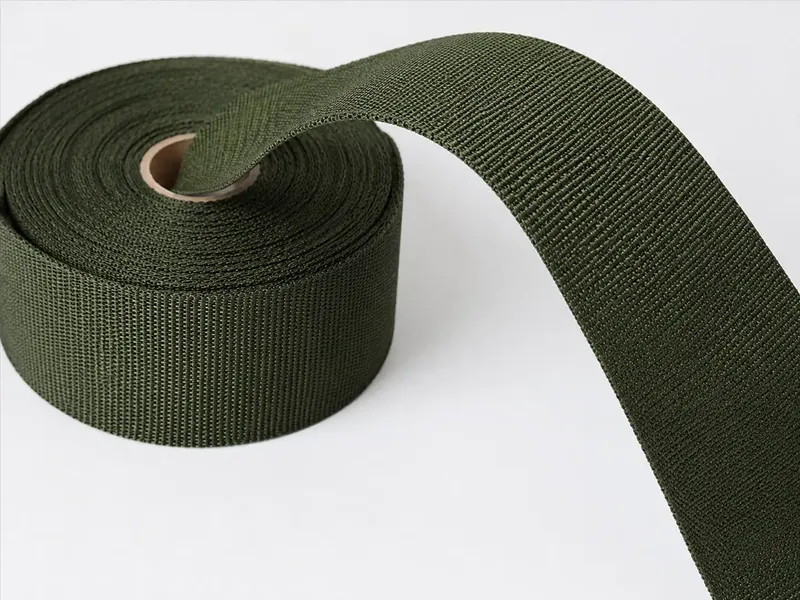
Heavy Duty Polyester Webbing
Industrial-grade polyester webbing designed for heavy-load applications and demanding outdoor environments.
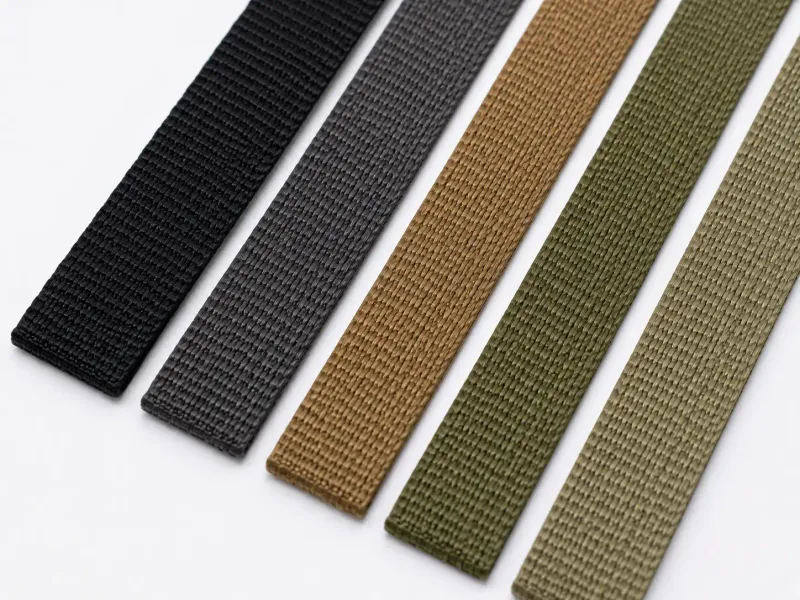
Heavy Duty Nylon Webbing
High-strength nylon webbing designed for industrial lifting, safety equipment and outdoor applications.
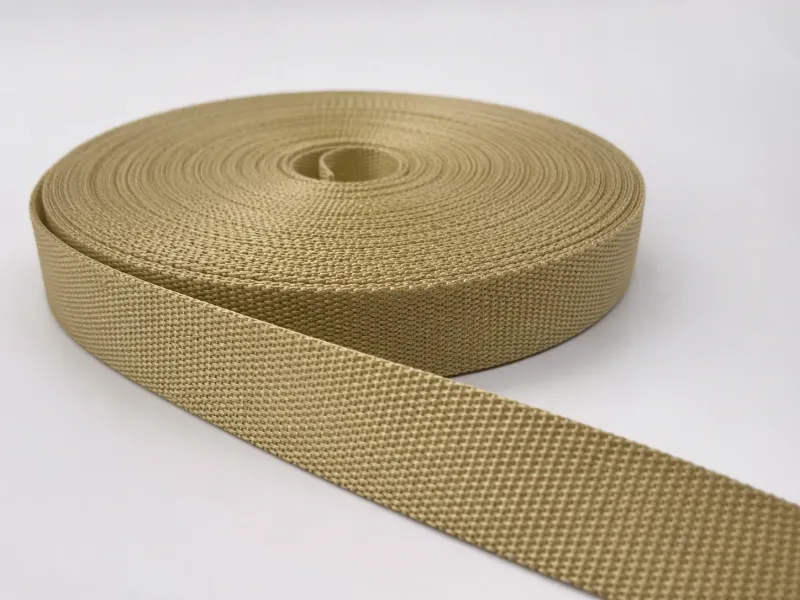
Industrial Aramid Webbing
Heavy-duty aramid webbing for industrial manufacturing, thermal protection and specialized equipment.
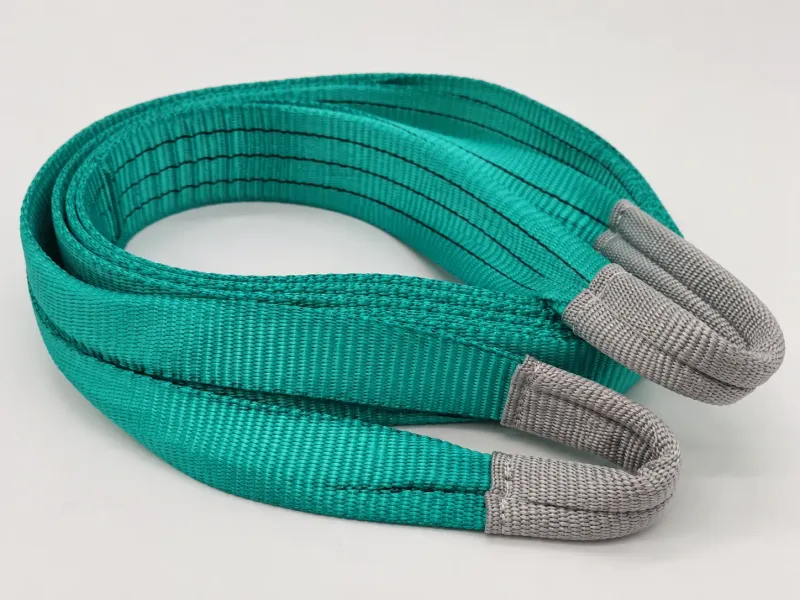
UHMWPE Lifting Sling Webbing
Ultra-high-strength UHMWPE webbing developed for lifting slings and rigging systems.
Related Categories
Related Applications
Related Industries
Complete breakdown of fiber types, construction methods, and performance specs
Request Material Specifications & Quote