Selecting lifting webbing without a verified load rating is a liability risk. As of 2026, industrial buyers expect traceable tensile data, documented safety factors, and batch-level certification before any sling or harness webbing enters service. We manufacture and certify webbing belts used in rigging, safety harness assemblies, and tactical load-bearing systems, backing every roll with tensile test data from our in-house pull testers. This page explains how load rating certification works for webbing belts, what documentation to request, and how our UHMWPE Lifting Sling Webbing and Aramid Webbing lines compare on tensile capacity, temperature tolerance, and application fit — so procurement and engineering teams can specify with confidence rather than guesswork.
The Problem: Unverified Load Ratings Create Liability
Why unrated webbing fails inspection
Many buyers source webbing belts based on width and color alone, without a documented breaking strength or safety factor. In lifting applications this is a compliance gap, not just a quality issue. A webbing belt rated for 2,000lbs tensile without a certified safety factor cannot legally be used as a 1:5 rated sling in most industrial safety programs.
- Uncertified webbing often lacks batch traceability, so a failure cannot be traced back to a specific production lot
- Generic suppliers rarely provide raw tensile test reports, only nominal "rated" figures
- Compared to certified UHMWPE or aramid webbing, uncertified polyester webbing can show tensile variance of 10-15% batch to batch
We run every lifting-grade batch through our own tensile pull test before shipment, recording breaking load, elongation, and safety factor on a batch report.
The Solution: Batch-Tested, Certified Webbing Belts
How we certify load ratings
Our lifting webbing lines are tested to establish a documented breaking strength, then a safety factor (commonly 5:1 or 7:1 depending on application) is applied to derive the Working Load Limit (WLL) printed on the certification sheet.
- Each production lot is pull-tested on calibrated tensile equipment
- Certification sheet includes lot number, raw breaking strength, applied safety factor, and resulting WLL
- MOQ for certified lifting webbing batches starts at 500 units per width/spec combination
- Standard lead time for certification paperwork is issued alongside the shipment, not after
Unlike uncertified stock webbing, every meter of our lifting-rated product is traceable to its test lot — this is the difference between "rated" and "certified."
Product Comparison: Tensile Capacity by Material
Choosing the right webbing for lifting duty
| Product | Material | Width | Tensile Strength |
| UHMWPE Lifting Sling Webbing | UHMWPE Fiber | 25-150mm | 10,000-50,000lbs |
| Heavy Duty UHMWPE Webbing | UHMWPE Fiber | 25-100mm | 5,000-30,000lbs |
| Heavy Duty Polyester Webbing | High Tenacity Polyester | 25-100mm | 2,000-10,000lbs |
| Mil-Spec Nylon Webbing | High Tenacity Nylon | 25-100mm | 3,000-10,000lbs |
For high-heat lifting environments (rigging near welding or foundry operations), our Industrial Aramid Webbing holds performance up to 500°C, whereas standard UHMWPE degrades above 100°C. Compared to nylon webbing, UHMWPE offers roughly 2-3x the tensile strength at equivalent width, making it the preferred choice for heavy sling assemblies where width is constrained.
How to Request and Read a Load Rating Certificate
Step-by-step specification process
- Step 1: Specify application (overhead lifting, safety harness, tie-down) and required WLL
- Step 2: We match webbing spec — e.g. UHMWPE Lifting Sling Webbing at 50mm for a target WLL of 4,000lbs at 5:1 safety factor implies a minimum breaking strength near 20,000lbs
- Step 3: Sample batch is pull-tested; certification sheet issued with lot number
- Step 4: Bulk order placed at confirmed MOQ (from 500 units), export documentation prepared for international shipment
Our QC team checks tensile results against the target spec before releasing a lot for shipment, and we serve customers across North America and Europe with export-quality documentation packaged for customs clearance.
Benefits of Certified Lifting Webbing
Why certification pays off
- Reduces liability exposure in Safety Protection Industry and Military & Tactical Industry deployments
- Enables direct integration into Safety Harness assemblies without third-party re-testing
- Cuts incoming-inspection time for buyers by an estimated 30-40% since batch data ships with the order
- Supports wholesale and bulk procurement programs with consistent lot-to-lot tensile performance
Compared to sourcing uncertified webbing and testing in-house afterward, ordering pre-certified batches from our production line removes a full inspection cycle from your supply chain — current industry standard practice as of 2026 for lifting-grade textile components.
Frequently Asked Questions
What safety factor is applied to certify lifting webbing load ratings?
Depending on application and industry requirement, we apply a 5:1 or 7:1 safety factor against the tested breaking strength to establish the Working Load Limit (WLL) printed on the certification sheet. Overhead lifting slings typically require the higher factor.
What is the MOQ for certified lifting webbing?
Certified lifting webbing batches, including UHMWPE Lifting Sling Webbing and Heavy Duty UHMWPE Webbing, start at 500 units per width and specification combination. Smaller test-run quantities can be discussed for qualification samples.
Which webbing material is best for high-temperature lifting applications?
Industrial Aramid Webbing and Heat Resistant Aramid Webbing perform up to 500°C, making them suitable for lifting near furnaces or welding zones. Standard UHMWPE webbing performs best below 100°C but offers higher raw tensile strength per width.
Do you provide batch traceability with each certification?
Yes. Every certified lot includes a lot number tied to the raw tensile test report, elongation data, and calculated WLL. This allows engineering teams to trace any in-service webbing belt back to its original production and test batch.
Can certified webbing be exported internationally?
Yes, we prepare export-quality documentation alongside the certification sheet for shipments serving North America and Europe. Bulk and wholesale orders include the necessary paperwork for customs clearance as standard practice.
Related Resources
Related Products (3)
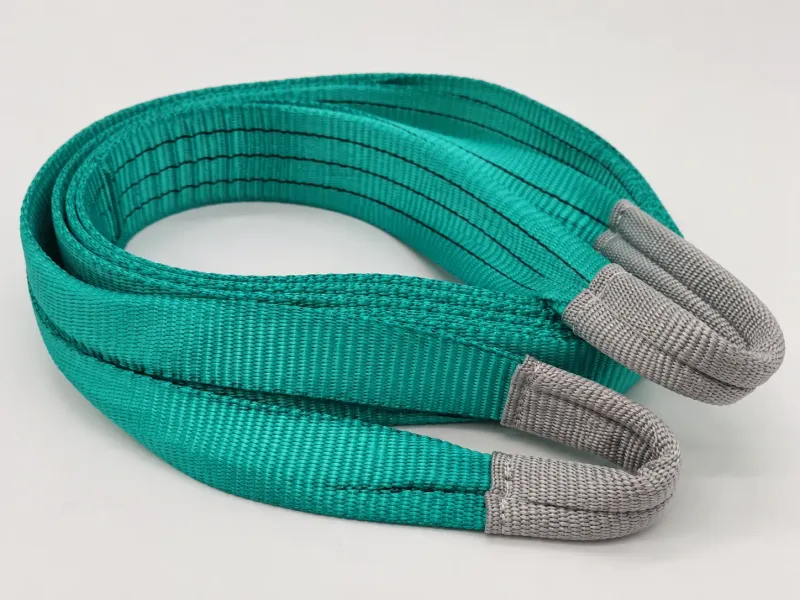
UHMWPE Lifting Sling Webbing
Ultra-high-strength UHMWPE webbing developed for lifting slings and rigging systems.
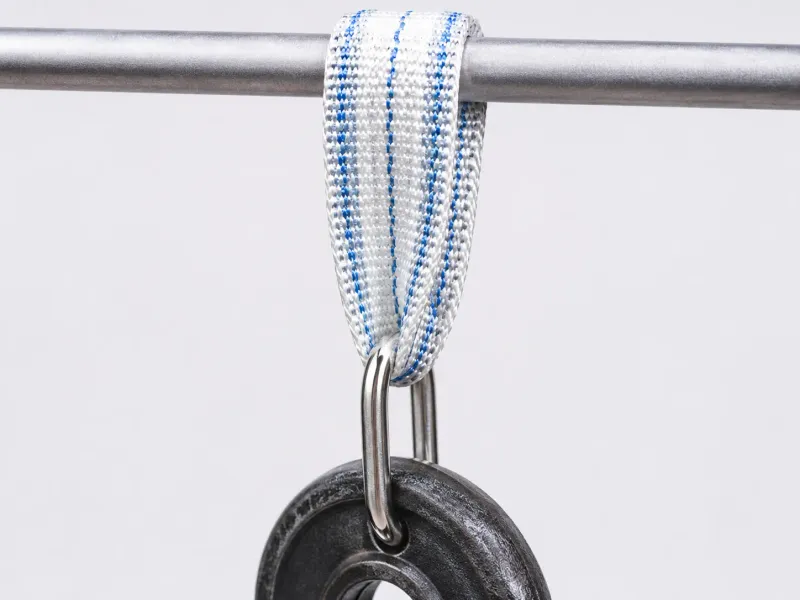
Heavy Duty UHMWPE Webbing
Ultra-high-strength UHMWPE webbing designed for critical load-bearing and industrial lifting applications.
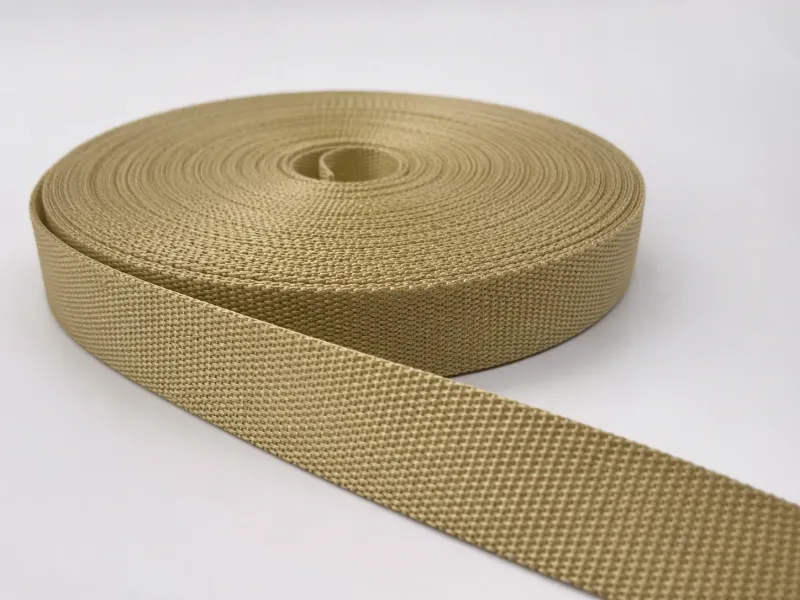
Industrial Aramid Webbing
Heavy-duty aramid webbing for industrial manufacturing, thermal protection and specialized equipment.
Related Categories
Related Applications
Related Industries
Verified tensile ratings and traceable certification for safe, compliant lifting webbing
Request Load Rating Certification Data