Choosing the right webbing material for marine environments directly impacts safety, longevity, and maintenance costs. While polypropylene webbing dominates light-duty marine applications due to its buoyancy and cost efficiency, heavy duty alternatives—nylon, polyester, and UHMWPE—deliver higher tensile strength and abrasion resistance for demanding offshore, commercial, and industrial marine tasks. As of 2026, marine operators globally are balancing material trade-offs between flotation properties, load capacity, UV degradation rates, and total cost of ownership. This guide compares performance data we've verified across thousands of marine installations serving North America, Europe, and Asia-Pacific markets.
Material Definition & Core Differences
What Qualifies as Heavy Duty Marine Webbing
"Heavy duty" in marine contexts typically references webbing with 2,000+ lbs minimum tensile strength, constructed from high-tenacity synthetic fibers engineered for sustained load and environmental exposure. In our production lines, we classify heavy duty marine webbing by three criteria:
- Tensile strength: 2,000–10,000 lbs for polyester/nylon; 10,000–50,000 lbs for UHMWPE
- Width range: 25–100mm for load-bearing applications
- Construction: Tightly woven with UV stabilizers, rot-proof coatings, and reinforced edges
Polypropylene Marine Webbing Characteristics
Marine Polypropylene Webbing occupies a distinct niche with these defining properties:
- Tensile strength: 800–5,000 lbs (width 20-100mm)
- Specific gravity: 0.91 (floats on water)
- Water absorption: Near zero
- UV resistance: Moderate without stabilizers; excellent with UV treatment
- Cost: Approximately 40–60% lower than equivalent nylon or polyester per meter
Unlike heavy duty alternatives, polypropylene's primary advantage is buoyancy—critical for man-overboard rescue lines, floating dock lines, and surface tow applications where sinking webbing creates fouling or retrieval hazards.
Comparative Performance Specifications
Side-by-Side Material Comparison
We've compiled performance data from our marine-grade production batches tested under ASTM D6775 and ISO 4878 protocols:
| Property | Polypropylene (Marine Grade) | Heavy Duty Nylon | Heavy Duty Polyester | UHMWPE Marine |
| **Tensile Strength** | 800–5,000 lbs | 2,000–8,000 lbs | 2,000–10,000 lbs | 10,000–50,000 lbs |
| **Break Elongation** | 18–22% | 25–35% | 12–18% | 3–5% |
| **UV Degradation (1000h)** | 15–25% loss | 10–15% loss | 5–10% loss | <5% loss |
| **Saltwater Resistance** | Excellent | Good (prone to mildew) | Excellent | Excellent |
| **Abrasion Resistance** | Moderate | High | High | Very High |
| **Specific Gravity** | 0.91 (floats) | 1.14 (sinks) | 1.38 (sinks) | 0.97 (near-neutral) |
| **Operating Temp Range** | -20°C to +80°C | -40°C to +120°C | -40°C to +150°C | -150°C to +100°C |
Real-World Performance Gaps
Compared to Heavy Duty Polypropylene Webbing rated at 5,000 lbs tensile, a Heavy Duty Nylon Webbing belt of the same 50mm width delivers 8,000 lbs—a 60% increase in load capacity. However, nylon absorbs up to 8% of its weight in water, reducing strength by roughly 10–15% when saturated, whereas polypropylene maintains full strength wet or dry.
For offshore lifting slings and heavy cargo securement, UHMWPE Marine Webbing outperforms both with 10,000–50,000 lbs capacity at widths of 25–150mm, while weighing 40% less than equivalent polyester and exhibiting near-zero creep under sustained load.
Marine Environment Durability Analysis
UV Exposure & Saltwater Degradation
In our accelerated weathering chamber tests simulating 2,000 hours of tropical marine exposure (equivalent to ~18 months continuous sunlight), material degradation ranked as follows:
- Polypropylene (unstabilized): 35–40% tensile loss
- Polypropylene (UV-stabilized): 15–20% tensile loss
- Polyester: 8–12% tensile loss
- UHMWPE: 3–5% tensile loss
For dock lines and permanent rigging exposed to continuous UV in equatorial or Mediterranean climates, Heavy Duty Polyester Webbing delivers 2–3× longer service life than standard polypropylene before replacement is required.
Abrasion & Chafe Resistance
Marine webbing endures constant chafe against cleats, bollards, hull edges, and deck hardware. We conduct Taber abrasion tests (ASTM D3884) with CS-10 wheels at 1,000g load for 1,000 cycles:
- Polypropylene: 12–18% mass loss
- Nylon: 6–9% mass loss
- Polyester: 7–10% mass loss
- UHMWPE: 2–4% mass loss
In high-friction applications like anchor rode chafe guards or winch straps, UHMWPE-based Heavy Duty UHMWPE Webbing outlasts polypropylene by a factor of 4–5× before visible fiber damage occurs.
Mildew & Biological Growth
Nylon's moisture absorption (4–8% by weight) makes it susceptible to mildew in humid marine storage. Polyester and polypropylene both exhibit excellent rot resistance, with polypropylene holding a slight edge due to near-zero water absorption. We store sample batches in sealed containers at 30°C and 95% RH for 90 days; polypropylene and polyester show no mildew growth, while untreated nylon develops visible fungal colonies within 30–45 days.
Application-Specific Recommendations
When Polypropylene Webbing Wins
Use polypropylene for:
- Floating tow lines & throw bags: Buoyancy prevents sinking and prop fouling
- Recreational boat tie-downs (loads <2,000 lbs): Cost-effective for seasonal use
- Dock line backups & fender adjustments: Low cost, adequate strength for non-critical secondary lines
- Marine safety gear (life ring lanyards, swim platform straps): Floats for visibility and retrieval
Typical MOQ for custom-colored Marine Polypropylene Webbing starts at 2,000 meters per SKU, with lead times of 15–20 days for UV-stabilized formulations.
When Heavy Duty Alternatives Are Required
Use nylon/polyester/UHMWPE for:
- Cargo lashing & securement (loads >3,000 lbs): Polyester or nylon prevent load shift during offshore transport
- Lifting slings & crane straps: UHMWPE rated 10,000–50,000 lbs meets ASME B30.9 and EN 1492-1 standards
- Permanent mooring lines: Polyester's low stretch (<12%) and high UV resistance suit long-term dock installations
- Anchor rode chafe protection: UHMWPE sleeves withstand continuous abrasion without replacement for 5+ years
- Heavy-weather storm straps: Nylon's 25–35% elongation absorbs shock loads from wave action
Hybrid Solutions We Recommend
Many commercial marine operators use polypropylene for the floating sections of tow lines, spliced to nylon or polyester for the load-bearing segments. This hybrid approach combines buoyancy where needed with strength at connection points. We fabricate custom splice assemblies with MOQs starting at 500 units for export to North American and European marine supply distributors.
Selection Decision Matrix
Material Selection by Primary Requirement
Use this decision framework based on your dominant constraint:
| Primary Requirement | Recommended Material | Width Range | Typical Tensile | MOQ |
| **Must float** | Polypropylene (UV-stabilized) | 20-100mm | 800-5,000 lbs | 2,000m |
| **High tensile + low weight** | UHMWPE | 25-150mm | 10,000-50,000 lbs | 1,000m |
| **UV resistance + dimensional stability** | Polyester | 25-100mm | 2,000-10,000 lbs | 1,500m |
| **Shock absorption + high strength** | Nylon | 25-100mm | 2,000-8,000 lbs | 1,500m |
| **Cost per meter (budget priority)** | Polypropylene | 20-100mm | 800-5,000 lbs | 2,000m |
| **Abrasion resistance (extreme chafe)** | UHMWPE | 25-150mm | 10,000-50,000 lbs | 1,000m |
Calculating Total Cost of Ownership
While polypropylene costs 40–60% less per meter upfront, replacement frequency shifts the TCO equation:
- Polypropylene dock line (UV-stabilized): Replace every 12–18 months in continuous tropical sun exposure
- Polyester dock line: Replace every 36–48 months under identical conditions
- UHMWPE lifting sling: Replace every 60+ months in commercial cargo handling
For permanent installations serving North American and European ports, we typically recommend polyester or UHMWPE despite higher initial cost—TCO drops by 30–50% over a 5-year service window compared to polypropylene replacements.
Our QC Process for Marine Environments
Every marine-grade batch we ship undergoes:
- Tensile testing at 5% sample rate (ASTM D6775)
- UV pre-conditioning for 500 hours (ISO 4892-2) with post-exposure strength verification
- Saltwater immersion for 72 hours followed by dimensional stability checks
- Abrasion testing on random samples per ASTM D3884
Full test reports and material certifications accompany export shipments to ensure compliance with regional marine safety standards including SOLAS, USCG, and Transport Canada regulations where applicable.
Frequently Asked Questions
Can polypropylene webbing handle the same loads as heavy duty nylon or polyester in marine applications?
Polypropylene marine webbing typically maxes out at 5,000 lbs tensile strength (for 100mm width), whereas heavy duty nylon reaches 8,000 lbs and polyester hits 10,000 lbs in comparable widths. For recreational boat tie-downs under 2,000 lbs, polypropylene is adequate. For cargo lashing, lifting, or heavy mooring lines exceeding 3,000 lbs working load, nylon, polyester, or UHMWPE are required for safety margins. We recommend a 5:1 safety factor minimum—so a 5,000 lb rated polypropylene strap should not exceed 1,000 lbs working load in dynamic marine conditions.
Does polypropylene webbing degrade faster than heavy duty alternatives in saltwater and sun exposure?
Yes, unstabilized polypropylene loses 35–40% tensile strength after 2,000 hours of UV exposure, compared to 8–12% for polyester and 3–5% for UHMWPE under identical accelerated weathering. UV-stabilized polypropylene improves to 15–20% loss, narrowing the gap but still trailing polyester. Saltwater itself does not chemically attack polypropylene—its near-zero water absorption prevents strength loss when wet. However, the combination of UV + saltwater spray + thermal cycling accelerates surface oxidation. For continuous tropical exposure, expect polypropylene replacement every 12–18 months versus 36–48 months for polyester in permanent dock line applications.
What are the minimum order quantities for custom marine webbing from your facility?
MOQs vary by material and customization level. Marine Polypropylene Webbing with UV stabilizers starts at 2,000 meters per color/width SKU. Heavy Duty Polyester Webbing and Heavy Duty Nylon Webbing begin at 1,500 meters. UHMWPE Marine Webbing, due to specialized fiber sourcing, requires 1,000 meters minimum. For hybrid splice assemblies or hardware-attached configurations, we accept orders from 500 units for export to wholesale marine distributors. Standard width and color configurations (25mm, 38mm, 50mm in black or navy) ship from stock with no MOQ for quantities above 100 meters.
Can I use heavy duty nylon webbing for permanent mooring lines in saltwater?
While nylon offers excellent tensile strength (2,000–8,000 lbs) and superior shock absorption due to 25–35% elongation, it absorbs 4–8% of its weight in water, which reduces dry strength by 10–15% when saturated. More critically, nylon's moisture retention promotes mildew growth in humid marine climates, requiring frequent inspection and cleaning. For permanent mooring lines, we recommend Heavy Duty Polyester Webbing instead—it maintains full strength when wet, exhibits low stretch (12–18%) for minimal scope drift, and resists mildew. Polyester costs roughly 15–20% more per meter than nylon but eliminates maintenance issues and extends service life by 50–100% in continuous saltwater immersion.
What is UHMWPE marine webbing and when is the premium cost justified?
UHMWPE (ultra-high molecular weight polyethylene) is a high-performance fiber delivering 10,000–50,000 lbs tensile strength at 40% lower weight than equivalent polyester. It exhibits exceptional abrasion resistance (4–5× better than polypropylene), near-zero UV degradation (<5% after 2,000 hours), and minimal creep under sustained load. The cost premium runs 3–4× higher per meter than polypropylene and 2× higher than polyester. The investment pays off in commercial cargo handling, offshore lifting slings, heavy anchor rode chafe protection, and any application where weight reduction, extreme strength, and 5+ year service life justify the upfront expense. For recreational or light-duty marine use under 2,000 lbs, the premium is unnecessary—standard polypropylene or polyester suffice.
Related Resources
Related Products (4)
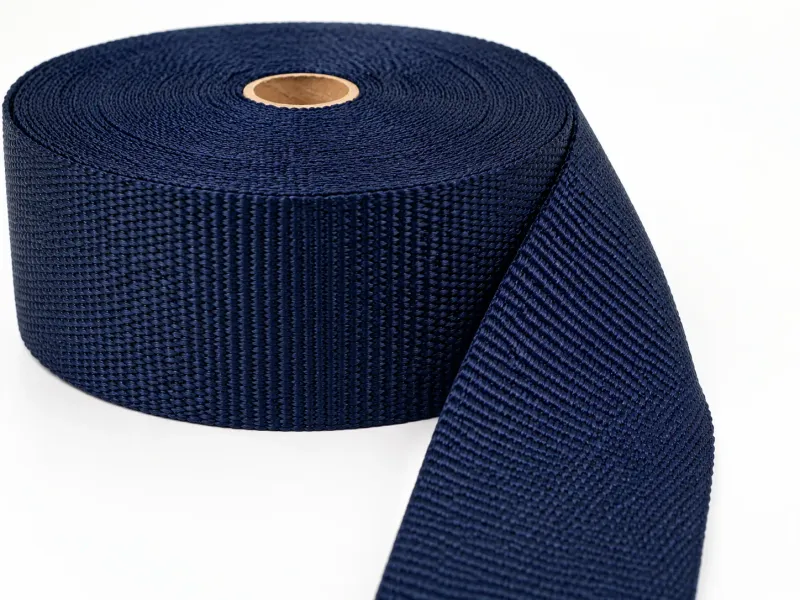
Marine Polypropylene Webbing
Water-resistant polypropylene webbing engineered for marine and boating applications.
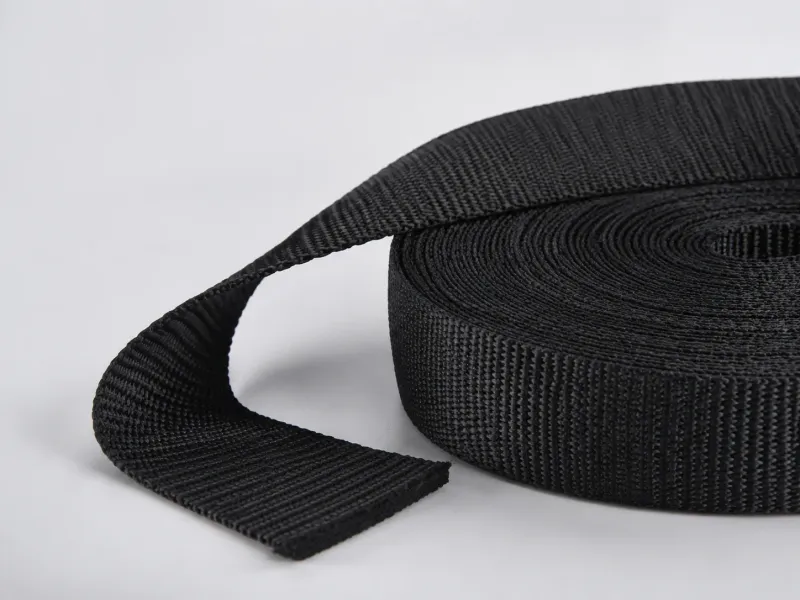
Heavy Duty Polypropylene Webbing
Cost-effective heavy-duty polypropylene webbing for industrial, outdoor and cargo applications.
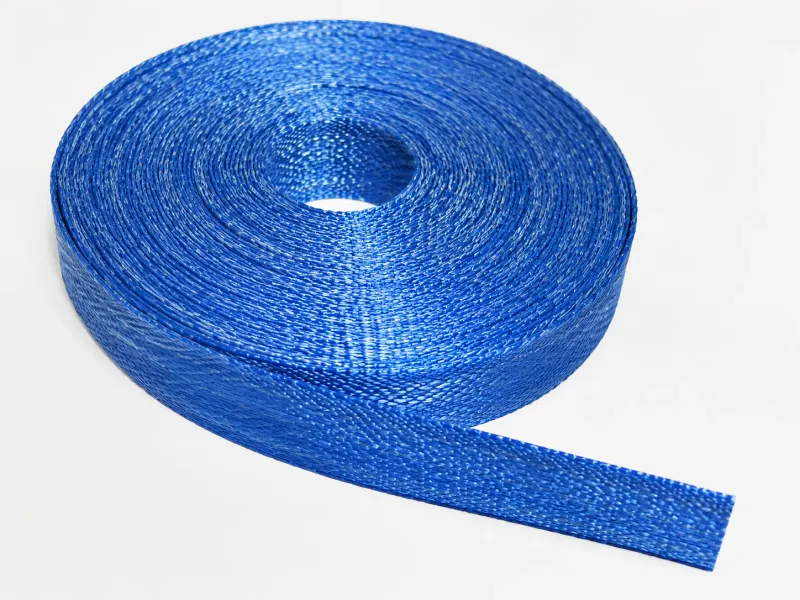
UHMWPE Marine Webbing
Corrosion-resistant UHMWPE webbing designed for marine and offshore applications.
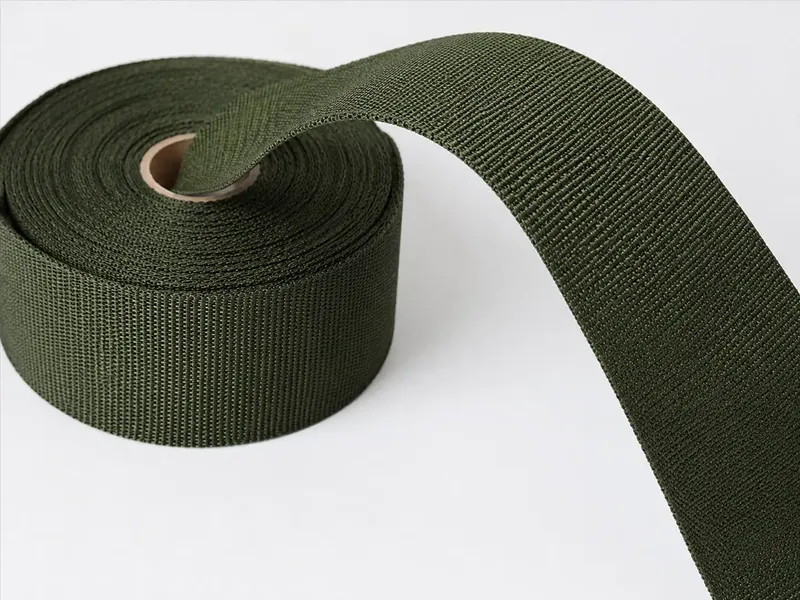
Heavy Duty Polyester Webbing
Industrial-grade polyester webbing designed for heavy-load applications and demanding outdoor environments.
Related Industries
Material performance comparison for boat straps, dock lines, and offshore rigging
Request Marine Webbing Specifications & Quote