Buyers searching for "flame retardant nylon web strapping" with EN ISO 11612 certification are often working from a spec sheet that conflates two different fiber families. As of 2026, standard nylon webbing is not inherently flame retardant: it softens and can melt when exposed to sustained flame, which disqualifies it from EN ISO 11612 heat-protective clothing requirements. We manufacture and export both fiber classes, so this page lays out, with real specs, why flame and heat protection duties go to our aramid line, while nylon webbing remains the right choice for high-tensile, abrasion-heavy, non-thermal applications like tactical gear and safety harness hardware runs.
The Problem: Nylon Is Not a Flame Retardant Fiber
Why "flame retardant nylon" is a misleading spec
Nylon (polyamide) is a thermoplastic. Under direct flame it softens, melts, and can drip rather than self-extinguish, which is the opposite of what EN ISO 11612 evaluates. That standard tests limited flame spread, convective heat, radiant heat, and in some cases molten metal splash, on protective clothing materials. Untreated nylon webbing does not pass these criteria as a class of material.
- LOI (Limiting Oxygen Index) for standard nylon typically sits below 25%, meaning it sustains burning in normal air (20.9% oxygen)
- Our Flame Retardant Aramid Webbing carries an LOI above 28%, the threshold generally associated with self-extinguishing behavior
- Compared to nylon, aramid fiber does not melt or drip when exposed to flame, it chars, which is why it is the base material for firefighter and welder PPE webbing
- We get this question weekly from safety equipment buyers who initially spec "FR nylon" before our team walks them through fiber chemistry
| Property | Standard/Nylon Webbing | Flame Retardant Aramid Webbing |
| Behavior in flame | Melts / can drip | Chars, self-extinguishes |
| LOI | Below 25% | **Above 28%** |
| Operating temperature | Degrades well under 200°C | Up to **500°C** (aramid range) |
| EN ISO 11612 suitability | Not suitable as base fiber | Suitable base fiber class |
The Solution: Matching Fiber to the Certification Requirement
Choosing the correct base webbing before certification testing
EN ISO 11612 certification is issued at the finished-garment or assembly level by an accredited test lab, not stamped onto raw webbing by the fiber supplier. What we control, and document, is the raw material performance that makes downstream certification achievable.
- Our Flame Retardant Aramid Webbing (Flame Resistant Aramid, width 25-75mm, LOI above 28%) is the material class typically submitted for EN ISO 11612 garment and harness assemblies
- Our Heat Resistant Aramid Webbing (Para-Aramid Fiber, width 20-100mm, temperature resistance up to 500°C) supports assemblies needing sustained radiant heat exposure
- Aramid Safety Harness Webbing (width 45-50mm, up to 500°C) is built specifically for harness hardware runs where thermal exposure and fall-protection tensile load both apply
- Unlike a single generic "FR webbing" SKU, we run separate aramid constructions by width and use case, so specifiers can match width tolerance to their harness or garment pattern rather than reworking the design around one fixed roll width
If your BOM currently lists nylon strapping for a thermal PPE application, the practical fix is a fiber swap to the aramid range above before submission to a certification lab, not a coating or additive applied to nylon.
Where Nylon Webbing Still Wins: Specs and Features
Nylon's real strengths: tensile load, abrasion, tactical use
Nylon webbing is not obsolete for safety-adjacent gear, it is simply the wrong fiber for thermal certification. For applications without flame exposure, nylon offers strong mechanical performance and is widely used across our catalog.
- Mil-Spec Nylon Webbing: High Tenacity Nylon, width 25-100mm, tensile strength 3,000-10,000 lbs, MIL-SPEC-aligned construction
- Heavy Duty Nylon Webbing: High Tenacity Nylon, width 25-100mm, tensile strength 2,000-8,000 lbs
- Tactical Jacquard Webbing: High Tenacity Nylon, width 25-100mm, military-grade tensile rating, used across Tactical Gear and Military & Tactical Industry programs
- Tubular Nylon Webbing: 100% Nylon, width 16-50mm, tubular construction for lightweight strap builds
- Compared to aramid, nylon costs less to produce and offers higher elongation/abrasion resistance in non-thermal duty cycles, which is why we still run high weekly volumes of nylon for hardware attachment and backpack straps alongside our aramid lines
When to specify aramid instead of nylon
- Application involves radiant heat, open flame, or molten splash exposure
- End product will be submitted for EN ISO 11612, NFPA, or similar heat-protective certification
- Operating environment exceeds 200°C, the general degradation range where nylon becomes unreliable
How to Source and Specify Correctly
Step-by-step: specifying webbing for a certification-bound assembly
1. Identify whether your finished product will face flame, radiant heat, or molten metal exposure during its EN ISO 11612 (or equivalent) test protocol
2. If yes, select from our aramid range: Flame Retardant Aramid Webbing, Heat Resistant Aramid Webbing, or Aramid Safety Harness Webbing based on width and load needs
3. If no thermal exposure applies, nylon options like Mil-Spec Nylon Webbing or Heavy Duty Nylon Webbing remain valid, lower-cost choices for tensile and abrasion duty
4. Confirm width tolerance against your pattern: aramid widths run 20-150mm across the category, nylon runs 10-100mm depending on product line
5. Submit finished assemblies, not raw webbing alone, to an accredited lab for EN ISO 11612 evaluation, since certification is issued at assembly level
- Our QC checks each aramid batch for width consistency and weave integrity before it ships, since certification test results are sensitive to material variance between lots
- We serve both North America and Europe from current production, with export-quality packing standard on bulk and wholesale orders
- As of 2026, current industry practice treats fiber selection at the design stage, not post-production treatment, as the reliable path to thermal certification, which is why we do not offer a "flame retardant nylon" SKU
Frequently Asked Questions
Can nylon webbing be treated to meet EN ISO 11612 certification?
Topical flame-retardant treatments on nylon can reduce surface ignition in limited tests, but they do not change nylon's fundamental melt behavior under sustained heat, which is a core failure mode EN ISO 11612 is designed to catch. We do not offer treated nylon as an EN ISO 11612 solution. For assemblies that need to pass this standard, we recommend our Flame Retardant Aramid Webbing or Heat Resistant Aramid Webbing as the base material instead.
What is the actual temperature difference between nylon and aramid webbing?
Standard nylon webbing begins to degrade well below 200°C and can melt under direct flame. Our aramid range, including Heat Resistant Aramid Webbing and Industrial Aramid Webbing, is rated for continuous operating temperatures up to 500°C. That gap is why aramid, not nylon, is the fiber submitted for EN ISO 11612 and similar heat-protective certifications.
Do you supply webbing that already carries EN ISO 11612 certification?
EN ISO 11612 certification is issued to finished garments or assemblies by accredited third-party test labs, not to raw webbing rolls. We supply the base aramid material, such as Flame Retardant Aramid Webbing with LOI above 28%, that garment and harness manufacturers use as the starting point for their own certification testing.
Which webbing should I use for a safety harness that also needs heat resistance?
For safety harness webbing with thermal exposure, we recommend Aramid Safety Harness Webbing, built in 45-50mm widths with temperature resistance up to 500°C. If your harness has no flame or heat exposure requirement, our nylon and UHMWPE Safety Harness Webbing options provide strong tensile performance at a lower material cost.
Is Mil-Spec Nylon Webbing suitable for tactical gear near heat sources?
Mil-Spec Nylon Webbing, rated to 3,000-10,000 lbs tensile strength in 25-100mm widths, is built for load-bearing tactical and military hardware, not thermal exposure. For tactical applications where flame or heat contact is expected, Military Aramid Webbing or Flame Retardant Aramid Webbing is the more appropriate specification.
Related Resources
Related Products (4)
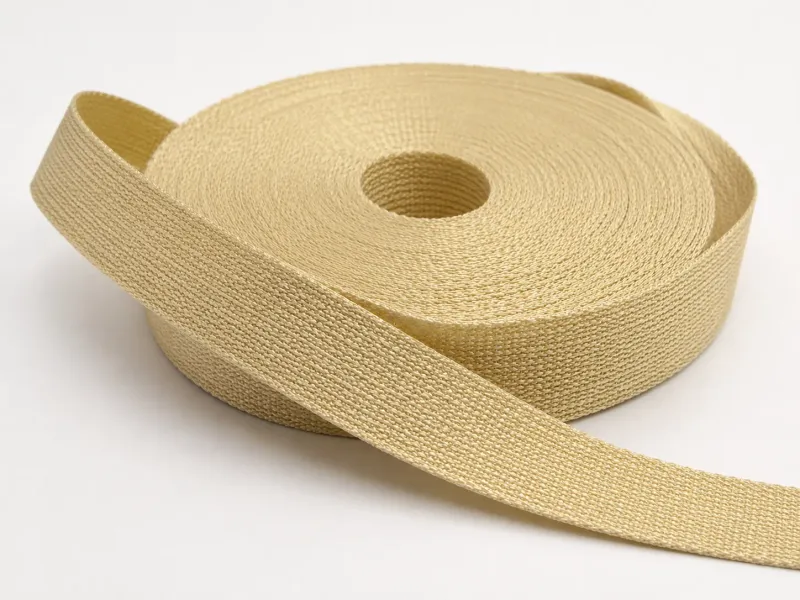
Flame Retardant Aramid Webbing
Flame-retardant aramid webbing designed for protective equipment and fire safety applications.
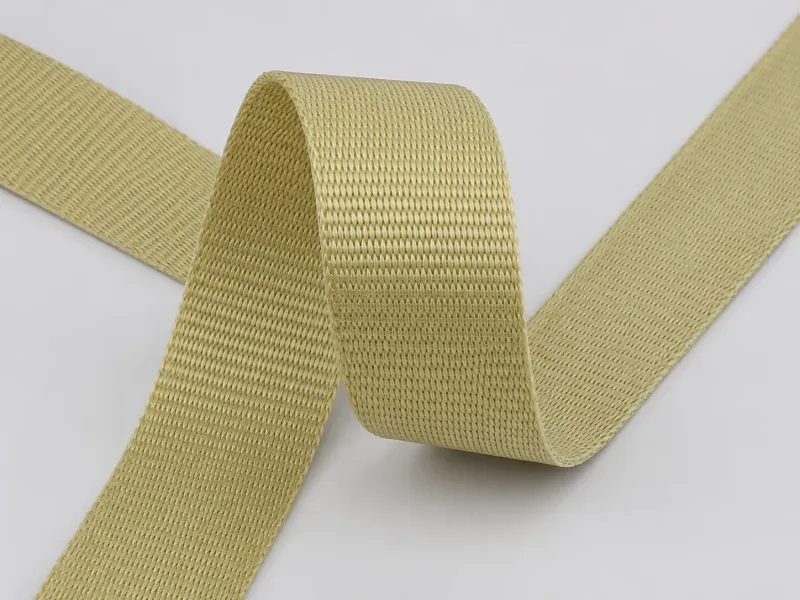
Heat Resistant Aramid Webbing
High-temperature aramid webbing engineered for thermal protection and industrial safety applications.
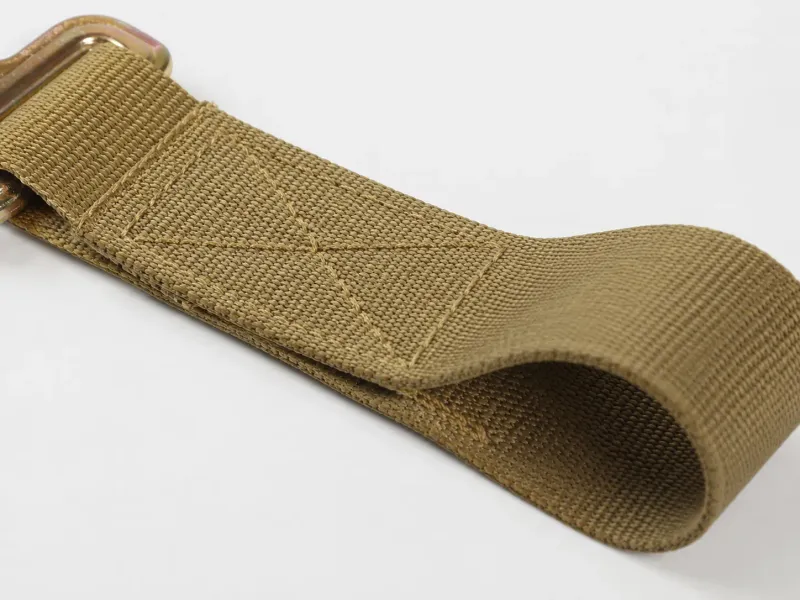
Aramid Safety Harness Webbing
Professional aramid webbing developed for high-temperature safety harness systems.
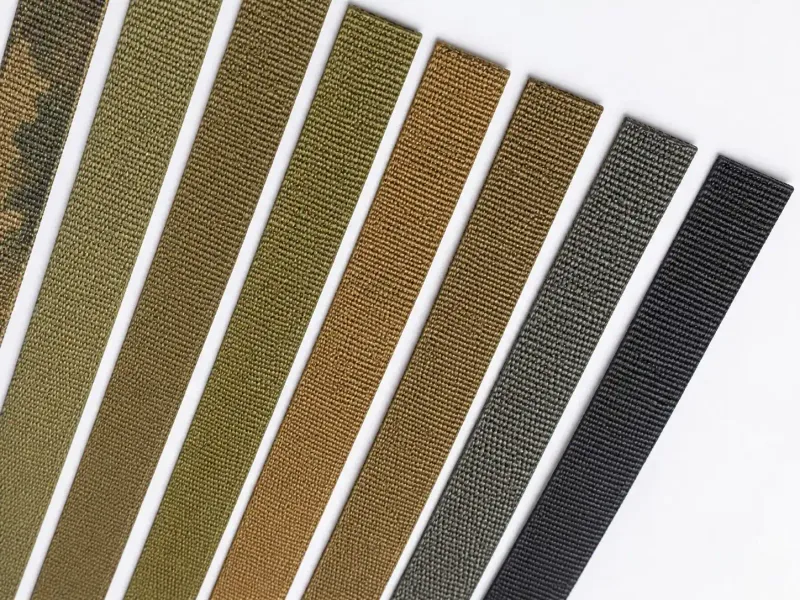
Mil-Spec Nylon Webbing
Military-grade nylon webbing engineered for tactical equipment, load-bearing systems and defense applications.
Related Categories
Related Industries
Why aramid, not nylon, meets flame-resistant standards for PPE and industrial use
Request Aramid Webbing Specifications