When workers operate in proximity to open flame, molten metal splash, or radiant heat, every component of their personal protective equipment (PPE) must meet the same rigorous standard — including the webbing in their belts, harnesses, and load-bearing straps. EN ISO 11612:2015 defines the minimum performance requirements for protective clothing against heat and flame, and sourcing a flame retardant nylon web belt that satisfies this certification is a non-negotiable step for safety-critical supply chains. At webbingmaker, we manufacture and wholesale FR nylon webbing in widths from 25 mm to 100 mm, engineered for compatibility with EN ISO 11612-rated garment systems and exported to safety protection industries across North America, Europe, and beyond.
Understanding EN ISO 11612 and Why Your Webbing Must Comply
What EN ISO 11612 Actually Requires
EN ISO 11612:2015 — *Protective clothing — Clothing to protect against heat and flame* — specifies performance levels for fabrics and accessories used in garments intended to protect workers from convective heat, radiant heat, contact heat, molten metal splash, and flame spread. As of 2026, it remains the primary harmonized European standard referenced in PPE Regulation (EU) 2016/425 for Category III life-saving equipment.
For a flame retardant nylon web belt or load-bearing strap integrated into an EN ISO 11612-compliant garment, the webbing component must not:
- Ignite and continue to burn after flame source removal (limited flame spread, ISO 15025 procedure A or B)
- Melt and drip onto the wearer
- Produce afterflame exceeding 2 seconds or afterglow exceeding 2 seconds (for Procedure A, surface ignition)
Why Ordinary Nylon Falls Short
Standard nylon (polyamide 6 or 6.6) has a limiting oxygen index (LOI) of approximately 20–22%, which means it ignites readily in ambient air (21% oxygen). It also melts before combusting, creating dangerous drip behaviour. Compared to untreated nylon webbing, a properly flame-retardant treated or inherently FR nylon webbing raises the effective LOI to above 26% and eliminates melt-drip, a critical distinction for worker safety under EN ISO 11612.
| Property | Standard Nylon Webbing | FR Nylon Webbing (EN ISO 11612 Compatible) |
| LOI | ~20–22% | >26% |
| Afterflame (surface ignition) | >10 seconds | ≤2 seconds |
| Melt / drip behaviour | Yes | Eliminated or minimised |
| Suitable for EN ISO 11612 garments | No | Yes |
This distinction is not cosmetic — specifying the wrong webbing in a flame-protection assembly can invalidate the entire garment's certification.
Product Specifications: FR Nylon Web Belt Webbing
Key Technical Specifications
Our flame retardant nylon web belt webbing is produced on high-density needle looms and is available in the following standard specifications as of 2026:
| Parameter | Specification |
| Material | High-tenacity flame retardant polyamide (nylon 6.6) |
| Width range | 25 mm – 100 mm |
| Thickness | 1.8 mm – 4.5 mm (width-dependent) |
| Tensile strength | **2,000 – 8,000 lbs** (see Heavy Duty Nylon Webbing range) |
| Colour options | Black, navy, hi-vis orange, hi-vis yellow, custom Pantone |
| Minimum order quantity | **500 metres** per colour/width SKU |
| Roll length | Standard 100 m rolls; custom roll lengths available |
| FR treatment durability | Withstands ≥25 industrial wash cycles per ISO 15797 |
Construction Details
- Weave: Tight plain weave with interlocked selvedge edges to prevent fraying at cut ends
- Yarn type: High-tenacity FR nylon multifilament; no filler yarns
- Edge finish: Heat-cut or ultrasonically sealed edges available for cut-to-length orders
- Surface: Smooth or textured anti-slip surface options
For harness and safety-belt applications requiring widths of 45–50 mm, our production line aligns with the same width range used in our Heavy Duty Nylon Webbing series, ensuring dimensional compatibility with standard buckle hardware.
Applications: Where FR Nylon Web Belts Are Specified
Industries and Use Cases
Flame retardant nylon web belts meeting EN ISO 11612 are specified across multiple high-risk industries. We supply bulk rolls to garment manufacturers, PPE assemblers, and OEM brands globally — with particularly strong demand from:
- [Safety Protection Industry](/industries/safety-protection-industry/): Load-bearing waist belts, suspenders, and accessory loops integrated into Category III protective suits for welders, foundry workers, and petrochemical plant operators
- [Military & Tactical Industry](/industries/military-tactical-industry/): Load-bearing equipment (LBE) where both ballistic and flame threats must be managed; often used alongside Mil-Spec Nylon Webbing in multi-hazard assemblies
- [Safety Harness](/applications/safety-harness/) manufacturing: FR webbing in full-body harnesses worn by workers in steelworks, offshore platforms, and electrical utilities; harness webbing commonly specified at 45–50 mm width with tensile strength ≥5,000 lbs
- Automotive manufacturing: Flame-retardant restraint webbing in vehicle assembly jigs and tow straps used near welding stations
Comparison with Aramid-Based Alternatives
For applications requiring continuous operating temperatures above 200°C, inherently flame-resistant aramid fibre webbing — such as our Flame Retardant Aramid Webbing with an LOI above 28% — is the industry-standard choice. However, FR nylon web belts offer a meaningful cost and weight advantage for applications where peak flame exposure is short-duration and EN ISO 11612 compliance (rather than continuous high-heat resistance) is the governing requirement. Compared to aramid, FR nylon webbing typically weighs 15–25% less per linear metre at equivalent widths, reducing overall garment weight for the wearer.
Wholesale and OEM Ordering: What to Expect
Bulk and OEM Supply Capabilities
Webbingmaker operates as an export-oriented wholesale manufacturer serving brands and assemblers across North America, Europe, and the Asia-Pacific region. Our FR nylon webbing production line runs standard and custom specifications on a rolling schedule.
Sampling and Development
- Pre-production samples available from 50–100 metres for qualification testing
- Colour matching to Pantone or physical swatch reference
- We provide material data sheets (MDS) and batch test reports with each production lot
- Custom widths outside the standard 25–100 mm range are assessable on enquiry
Documentation Provided
For EN ISO 11612-related procurement, buyers routinely require documentation to support their garment-level certification. We supply:
- Burn test data per ISO 15025 (surface and edge ignition) for the specific lot
- Tensile test reports per ISO 13934-1
- Wash durability data (FR performance retention after ≥25 cycles)
- Material composition declarations for REACH compliance
Private Label and Custom Weave
OEM buyers can specify custom jacquard weave patterns, logo weaves, or colour-coded stripe systems for traceability within FR garment assemblies. MOQ for custom-woven FR nylon webbing starts at 2,000 metres per design.
Selecting the Right FR Webbing: A Practical Buyer's Checklist
How to Specify Correctly for EN ISO 11612 Compliance
Procuring FR webbing for a certified PPE assembly involves more than selecting any flame-resistant product. Use this checklist to align your specification with the standard's requirements:
- Confirm the applicable EN ISO 11612 performance level: The standard defines codes A1/A2 (limited flame spread), B (convective heat), C (radiant heat), D (molten aluminium splash), E (molten iron splash), and F (contact heat). Your webbing must not compromise the garment's rated code.
- Specify LOI ≥ 26% for nylon-based webbing to ensure self-extinguishing behaviour in ambient air.
- Confirm no melt-drip under ISO 15025 test conditions — request a burn test video or report from the supplier.
- Width and tensile strength: Match to hardware (buckles, D-rings) rated for the same load. For safety harness applications, 45–50 mm / ≥5,000 lbs is the common specification.
- FR durability: Confirm the FR treatment is durable to ≥ 25 wash cycles per ISO 15797 — not a topical finish that degrades after first wash.
- Traceability: Request lot-numbered batch documentation to support your own garment CE-marking technical file.
Compared to sourcing FR webbing from general distributors, working directly with a manufacturer enables traceability to the yarn batch, which is increasingly required by notified bodies conducting EN ISO 11612 garment audits as of 2026.
Frequently Asked Questions
What is EN ISO 11612 certification and why does it apply to a nylon web belt?
EN ISO 11612:2015 is the international standard specifying performance requirements for protective clothing designed to protect against heat and flame. It applies to all components of a garment assembly — including webbing belts, straps, and harness elements — because a non-compliant webbing component can melt, drip, or sustain combustion and thereby compromise the protection the garment is designed to provide. Any nylon web belt integrated into an EN ISO 11612-rated garment must demonstrate limited flame spread per ISO 15025, with afterflame not exceeding 2 seconds and no melt-drip behaviour.
What is the minimum order quantity for flame retardant nylon web belt webbing?
Standard MOQ is 500 metres per colour and width SKU for stock FR nylon webbing constructions. For custom widths, custom colours, or OEM jacquard-woven FR nylon webbing, MOQ starts at 2,000 metres per specification. Pre-production qualification samples of 50–100 metres are available prior to bulk ordering.
How does FR nylon webbing compare to aramid webbing for flame protection?
FR nylon webbing is appropriate for applications where short-duration flame exposure and EN ISO 11612 compliance are the primary requirements. It is typically 15–25% lighter than aramid webbing at equivalent widths, offering wearer comfort advantages. Aramid webbing — such as Flame Retardant Aramid Webbing with an LOI above 28% — is preferred for continuous high-temperature environments above 200°C, such as foundry or steelmaking applications. For most PPE garment belts and accessory straps in welding, utilities, and general industrial FR applications, properly specified FR nylon is a practical and cost-effective choice.
What documentation is provided to support EN ISO 11612 garment certification?
We provide batch-level documentation including ISO 15025 burn test reports (surface and edge ignition), ISO 13934-1 tensile strength test data, wash durability data confirming FR performance retention after a minimum of 25 industrial wash cycles per ISO 15797, material composition declarations, and REACH compliance statements. Lot numbers are traceable to yarn batch, which supports the technical file requirements for CE-marking under PPE Regulation (EU) 2016/425.
Can FR nylon webbing be customised with logos or custom colours for OEM garment brands?
Yes. Custom Pantone colour matching, stripe systems for garment traceability, and jacquard-woven logo or pattern designs are all available in our FR nylon webbing production line. Custom colour and standard-construction orders have an MOQ of 500 metres per SKU. Custom-woven FR nylon webbing with jacquard patterns or logo weaves has an MOQ of 2,000 metres per design. FR performance is validated on each custom production run and documented in the accompanying batch test report.
Related Resources
Related Products (3)
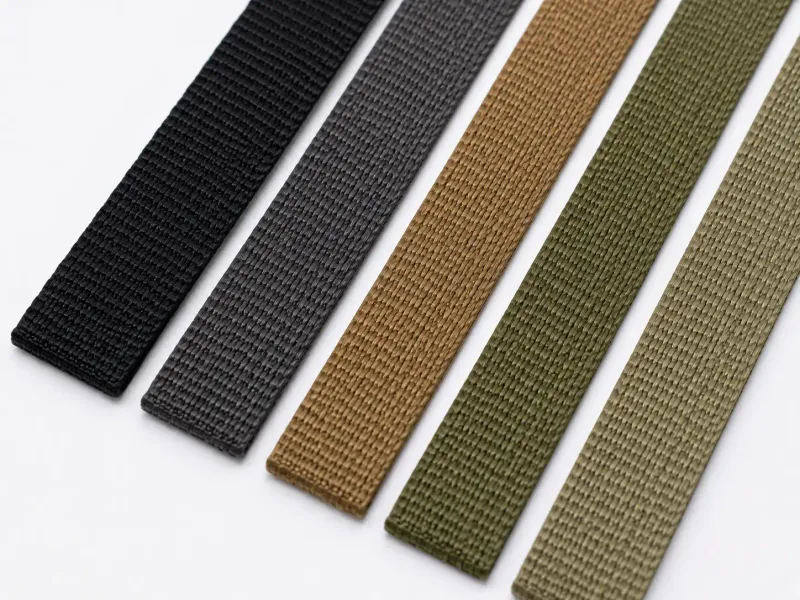
Heavy Duty Nylon Webbing
High-strength nylon webbing designed for industrial lifting, safety equipment and outdoor applications.
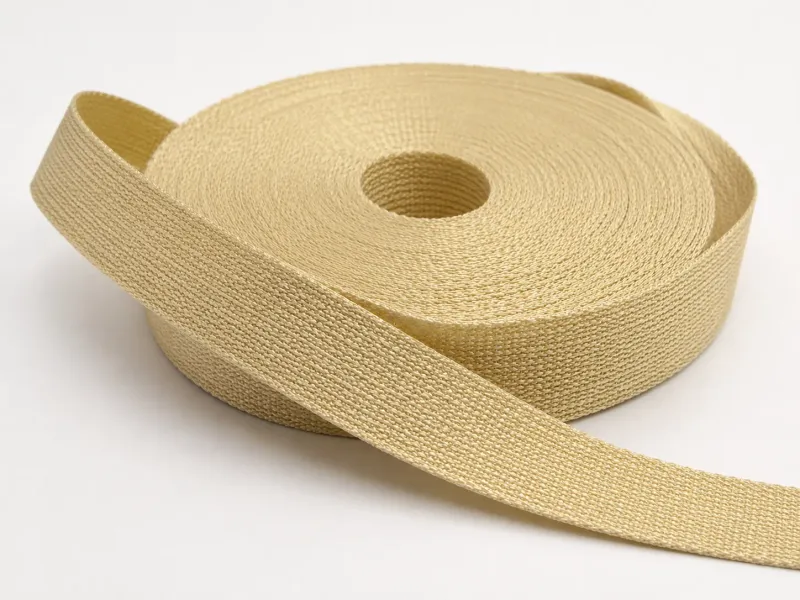
Flame Retardant Aramid Webbing
Flame-retardant aramid webbing designed for protective equipment and fire safety applications.
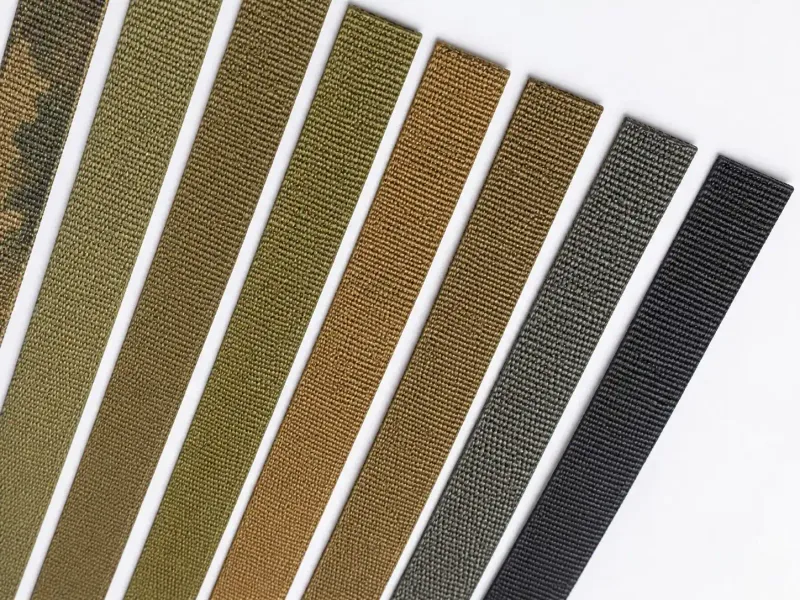
Mil-Spec Nylon Webbing
Military-grade nylon webbing engineered for tactical equipment, load-bearing systems and defense applications.
Related Categories
Related Applications
Related Industries
Export-grade flame resistant nylon webbing engineered to meet EN ISO 11612 protective clothing standards
Request a Bulk Quote for FR Nylon Webbing