Choosing the right nylon web strapping width for lifting slings is a specification decision, not a visual estimate. Width affects how the webbing interfaces with load edges, sling fittings, stitching layouts, and the intended lifting configuration. For procurement teams and sling fabricators, the practical starting point is the engineered working load limit of the completed sling, followed by the webbing construction and verified strength data. As of 2026, export and wholesale programs should document these inputs before production. Webbingmaker supports bulk webbing inquiries for globally supplied lifting-related applications, while the finished sling design and use must remain under qualified technical control.
Start With the Complete Sling Requirement
Define the lifting problem before selecting width
A sling is a system of webbing, sewn terminations, fittings, protective components, and a stated working load limit. Selecting a 25 mm, 50 mm, or 100 mm nylon webbing width before defining that system can produce an unsuitable design.
- Record the maximum load in lb or kg, the lift type, and the number of supporting legs.
- Identify whether the webbing bears against a rounded surface, a load edge, or hardware.
- Specify the intended sling configuration: vertical, basket, choker, or another engineered arrangement.
- Require the sling assembler to establish working load limit, safety factors, stitching, and inspection criteria for the finished product.
| Input | Why it changes width selection |
| Load mass | Establishes the required completed-sling capacity |
| Hardware throat | Limits the webbing width that can seat correctly |
| Edge condition | May require a wider bearing surface or separate protection |
| Sling angle | Changes leg loading in multi-leg arrangements |
Compared with selecting by a familiar strap size, documenting these 4 inputs creates a traceable basis for a bulk material specification. It also prevents a webbing purchase order from implying a lifting rating that only the completed, tested sling can carry.
Use Width as One Part of Strength Selection
Width, construction, and tensile data work together
A wider strap can distribute contact pressure over more surface area, but width alone does not establish breaking strength or working load limit. Yarn type, weave construction, thickness, finishing, sewn eyes, and hardware all affect the final sling assembly.
- Heavy Duty Nylon Webbing is listed in widths from 25-100 mm with tensile strength from 2,000-8,000 lbs.
- Mil-Spec Nylon Webbing is listed in widths from 25-100 mm with tensile strength from 3,000-10,000 lbs.
- Tubular Nylon Webbing is available from 16-50 mm and has a tubular construction.
| Available product | Published width range | Published tensile information |
| Heavy Duty Nylon Webbing | **25-100 mm** | **2,000-8,000 lbs** |
| Mil-Spec Nylon Webbing | **25-100 mm** | **3,000-10,000 lbs** |
| Tubular Nylon Webbing | **16-50 mm** | Tubular construction |
These figures describe listed webbing products, not a rated lifting sling. Unlike a general strap requirement, a lifting application needs the fabricator to account for strength reductions associated with sewn terminations, bends, fittings, and the actual load path. We recommend requesting the exact construction and test basis needed for each export-quality production run.
Check Load Contact and Hardware Fit
Match the webbing footprint to the connection points
The selected width must pass through, wrap around, or seat within the intended hardware without twisting, folding, or concentrating load at a narrow contact point. A 50 mm webbing may be appropriate for a broad bearing surface yet incompatible with a smaller fitting throat; this must be checked on the actual assembly.
- Measure the usable hardware opening in mm, rather than relying on nominal hook or shackle descriptions.
- Confirm that the webbing lies flat at the contact point and has room for the specified protective layer.
- Evaluate edge radii and surfaces before approving a width for repeated handling.
- Keep all assembly dimensions on the technical drawing, including webbing width and seam layout.
| Fit check | Acceptance question |
| Hardware opening | Does the selected width pass and seat without folding? |
| Bearing surface | Is the contact area broad enough for the planned load path? |
| Edge exposure | Is separate protection specified where needed? |
In our material discussions, we treat a 100 mm webbing as a dimensional option, not an automatic upgrade over 25 mm webbing. The better choice is the width that matches the qualified sling design, its hardware, and its controlled handling environment.
Account for Configuration and Service Conditions
Review the conditions that can change a sling specification
The same webbing can experience different loading and contact conditions when a sling changes from a vertical lift to a choker or basket arrangement. Multi-leg geometry, edge contact, and handling frequency must be reviewed by the responsible lifting professional before setting a width.
- Record the smallest planned sling angle in degrees for multi-leg lifts.
- Separate straight-pull requirements from choker and basket requirements in the specification.
- Define exposure to moisture, abrasion, sharp edges, and contaminants.
- Establish inspection and removal-from-service criteria for the completed sling under the applicable local rules.
| Service factor | Width-selection implication |
| Repeated load handling | Verify webbing construction and contact protection |
| Narrow edge contact | Do not rely on width alone; specify edge protection |
| Multi-leg lift | Evaluate leg loading at the stated angle |
As of 2026, the current industry practice is to treat webbing selection as part of an engineered lifting plan, not as a standalone material comparison. Nylon Webbing can be supplied for wholesale and bulk conversion work, but it should not be represented as a finished lifting solution without validated assembly data.
Build a Clear Bulk Webbing Specification
Send technical details that support repeatable purchasing
A precise request reduces ambiguity between the buyer, webbing supplier, and sling fabricator. For global supply to North America, Europe, and other markets, include the units and revision date on every drawing and purchase specification.
- State the required width, such as 25 mm, 50 mm, or 100 mm, plus permissible tolerance where applicable.
- Identify the webbing product, material, color requirement, roll length, and estimated bulk volume.
- Provide target tensile data for the webbing and distinguish it from the required working load limit of the completed sling.
- Attach hardware dimensions, assembly drawings, intended configuration, and end-use environment.
| Specification field | Example entry |
| Nominal webbing width | **50 mm** |
| Material family | High-tenacity nylon |
| Finished product control | Qualified fabricator defines sling rating |
| Order format | Bulk rolls for conversion |
This approach is more useful than requesting a “lifting-rated strap” by width alone. We can discuss available nylon webbing widths and published product data, while the finished sling manufacturer remains responsible for validation, labeling, and conformity in the destination market.
Frequently Asked Questions
Can I choose a nylon sling width based only on the load weight?
No. Load weight is essential, but width must also suit the complete sling construction, hardware fit, lift configuration, contact surfaces, and required working load limit. Published webbing tensile data, such as the 2,000-8,000 lbs range listed for Heavy Duty Nylon Webbing, is not the same as the rating of a completed sling.
What nylon webbing widths are available for lifting-related projects?
The listed Heavy Duty Nylon Webbing range is 25-100 mm, and Mil-Spec Nylon Webbing is also 25-100 mm. Tubular Nylon Webbing is listed at 16-50 mm. Availability of a particular width should be confirmed against the required construction and bulk order specification.
Does wider nylon webbing automatically provide a higher sling capacity?
No. A wider webbing can increase bearing area, but capacity depends on material, weave, thickness, sewn terminations, fittings, configuration, and testing of the full assembly. A 100 mm strap is not automatically appropriate or rated for a particular lift without a qualified sling design.
What information should I provide for a bulk nylon webbing inquiry?
Provide the requested width in mm, material family, target webbing tensile data, color, quantity, roll format, hardware dimensions, and end use. Include the destination market and the sling fabricator's assembly requirements so the material request can be evaluated accurately.
Related Resources
Related Products (3)
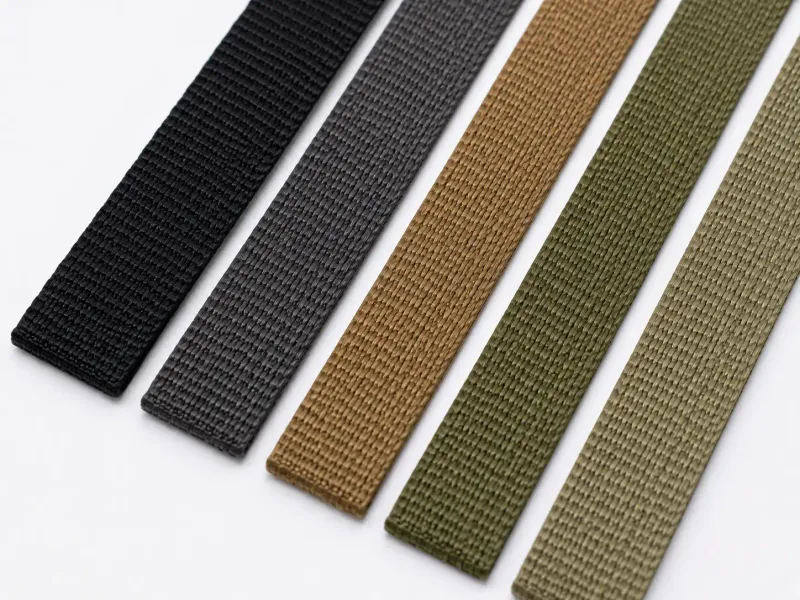
Heavy Duty Nylon Webbing
High-strength nylon webbing designed for industrial lifting, safety equipment and outdoor applications.
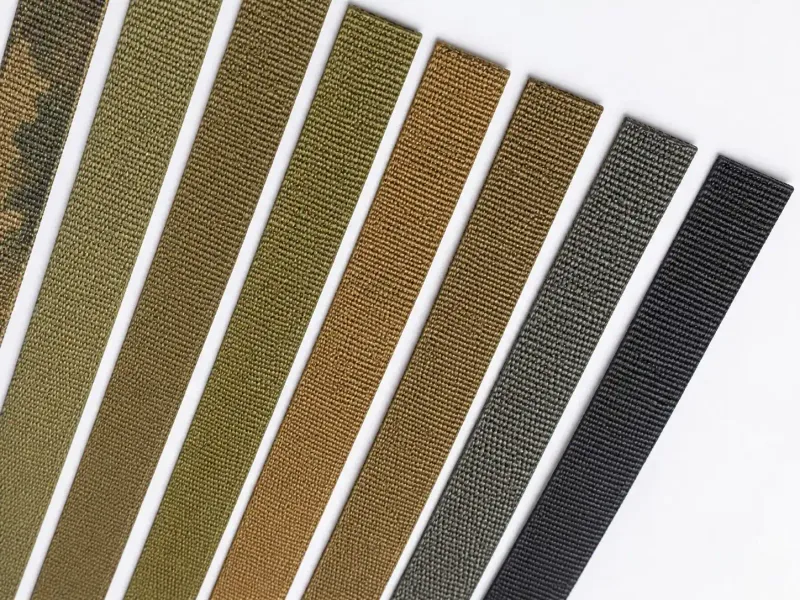
Mil-Spec Nylon Webbing
Military-grade nylon webbing engineered for tactical equipment, load-bearing systems and defense applications.
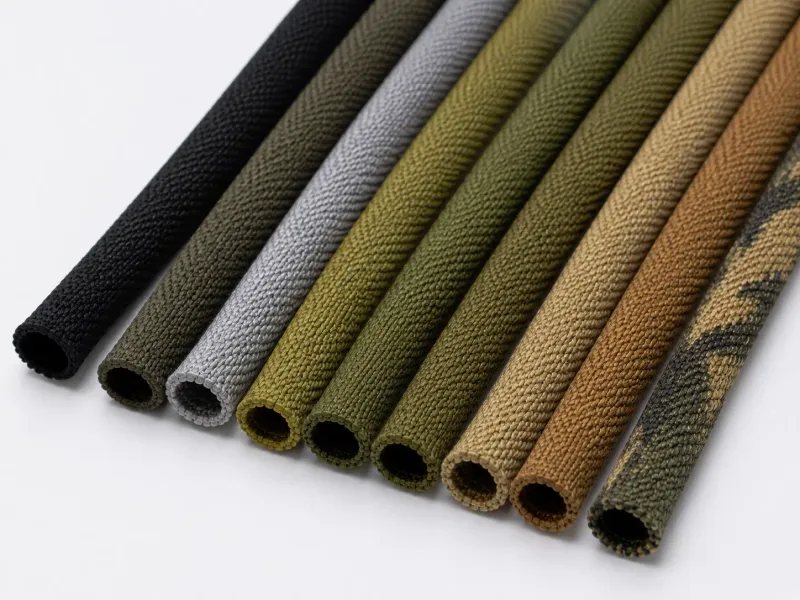
Tubular Nylon Webbing
Premium tubular nylon webbing designed for climbing, rescue and fall protection equipment.
Related Categories
Related Industries
Specify sling webbing width around load, hardware, and service conditions
Request Nylon Webbing Specification Support