Selecting the right industrial webbing material requires understanding the fundamental differences between aramid and UHMWPE fibers. As of 2026, both materials serve critical roles in heavy-duty applications, but their performance characteristics diverge significantly under extreme conditions. Our technical comparison examines tensile strength, temperature resistance, chemical compatibility, and lifecycle costs to help procurement teams make informed decisions for their industrial webbing requirements.
Material Composition & Core Properties
Aramid and UHMWPE represent two distinct classes of high-performance synthetic fibers, each engineered for specific industrial demands.
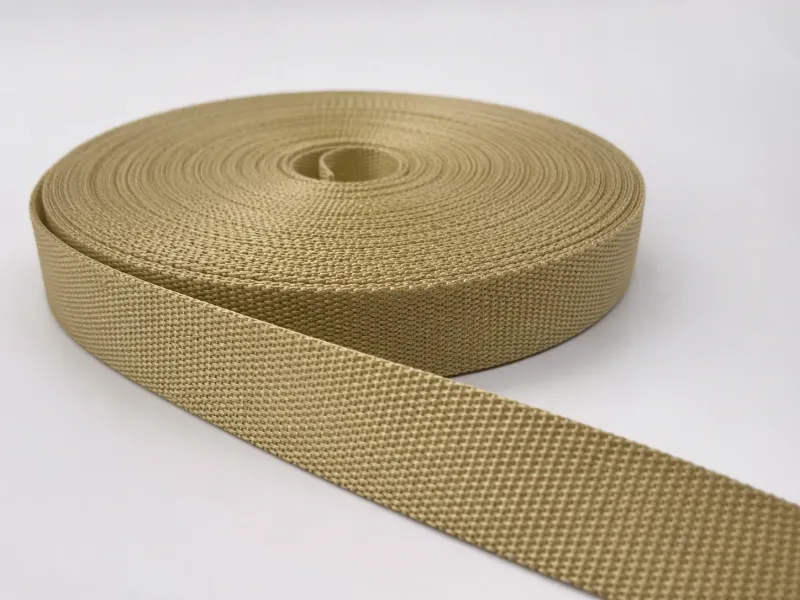
- Industrial Aramid Webbing utilizes para-aramid fibers with an operating temperature range of -50°C to 500°C and width options from 20-150mm
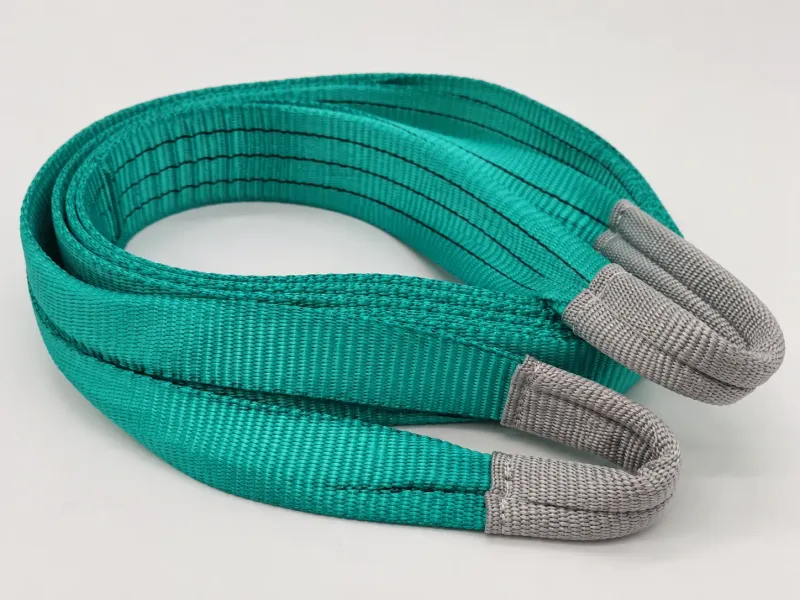
- UHMWPE Lifting Sling Webbing features ultra-high-molecular-weight polyethylene fibers delivering tensile strengths of 10,000-50,000 lbs with widths from 25-150mm
Compared to standard polyester webbing, aramid offers superior thermal stability while UHMWPE provides exceptional strength-to-weight ratios. Unlike cotton-based webbing, both materials maintain structural integrity under extreme conditions that would degrade conventional textiles.
| Property | Industrial Aramid Webbing | UHMWPE Webbing |
| Operating Temperature | -50°C to 500°C | Up to 80-100°C |
| Tensile Strength | High | 10,000-50,000 lbs |
| Water Absorption | Low | Near zero |
| UV Resistance | Excellent | Good |
| Chemical Resistance | Excellent | Excellent |
Temperature Resistance & Thermal Performance
Thermal stability remains the primary differentiator between these two webbing types. For applications involving heat exposure, aramid demonstrates clear advantages.
- Heat Resistant Aramid Webbing maintains structural integrity at temperatures up to 500°C, making it suitable for welding applications, foundry operations, and firefighting equipment
- Flame Retardant Aramid Webbing achieves a Limiting Oxygen Index (LOI) of above 28%, meaning it self-extinguishes and resists ignition in oxygen-rich environments
- UHMWPE webbing begins to soften at approximately 80-100°C, limiting its use in high-temperature industrial settings
In our experience prepping bulk kits for thermal protection applications, we consistently recommend aramid for any environment exceeding 150°C continuous exposure. Compared to nylon webbing, which degrades at temperatures above 120°C, aramid provides a significantly wider safety margin for heat-intensive operations.
| Temperature Rating | Aramid Webbing | UHMWPE Webbing |
| Continuous Use | Up to 500°C | Up to 80°C |
| Short-Term Exposure | 500°C+ | 100°C |
| Melting Point | Does not melt | ~150°C |
| LOI Rating | Above 28% | N/A |
Tensile Strength & Load Capacity
When maximum load-bearing capacity is critical, UHMWPE webbing outperforms aramid on a weight-for-weight basis. This makes it the preferred choice for lifting and rigging applications.
- UHMWPE Lifting Sling Webbing delivers tensile strengths ranging from 10,000 to 50,000 lbs depending on width and construction
- Heavy Duty UHMWPE Webbing provides tensile ratings of 5,000-30,000 lbs for general industrial use
- Industrial Aramid Webbing offers high tensile strength with superior thermal protection, though exact pound ratings vary by width and weave configuration
Compared to heavy duty polyester webbing with tensile strengths of 2,000-10,000 lbs, UHMWPE webbing delivers approximately 3-5x the strength at equivalent widths. This strength advantage allows for narrower webbing profiles while maintaining identical load ratings, reducing material weight and bulk in lifting applications.
| Product Type | Width Range | Tensile Strength |
| UHMWPE Lifting Sling Webbing | 25-150mm | 10,000-50,000 lbs |
| Heavy Duty UHMWPE Webbing | 25-100mm | 5,000-30,000 lbs |
| Industrial Aramid Webbing | 20-150mm | High (application-specific) |
| Heavy Duty Polyester Webbing | 25-100mm | 2,000-10,000 lbs |
Application-Specific Selection Guide
Choosing between aramid and UHMWPE webbing depends on your application's primary stress factors: temperature, load, chemical exposure, or environmental conditions.
When to Select Aramid Webbing
- Safety Harness Applications: Aramid safety harness webbing (45-50mm width) provides temperature resistance up to 500°C for welding and foundry environments
- Fire Protection Equipment: Flame retardant aramid webbing with LOI above 28% meets stringent fire safety requirements
- Military & Tactical Applications: Military aramid webbing constructed to MIL-SPEC standards (20-75mm width) for defense equipment
- Cut-Resistant Applications: Cut resistant aramid webbing (20-100mm width) with high cut resistance for industrial safety gear
When to Select UHMWPE Webbing
- Lifting & Rigging: UHMWPE lifting sling webbing (25-150mm width) with tensile strengths up to 50,000 lbs for heavy load handling
- Marine Environments: Marine grade UHMWPE webbing (20-100mm width) with excellent chemical resistance and near-zero water absorption
- Tactical Gear: UHMWPE tactical webbing (20-75mm width) with military grade construction for lightweight defense applications
- Climbing Equipment: UHMWPE climbing webbing (10-30mm width) offering ultra-lightweight performance for recreational and professional climbing
Unlike aramid, UHMWPE webbing floats on water and maintains strength when wet, making it ideal for marine and offshore applications. For safety harness and climbing equipment applications, both materials meet industrial grade requirements, but UHMWPE provides significant weight savings.
| Application | Recommended Material | Key Advantage |
| Welding/Fire Protection | Aramid | Temperature resistance to 500°C |
| Heavy Lifting | UHMWPE | Tensile strength up to 50,000 lbs |
| Marine/Offshore | UHMWPE | Chemical resistance, floats |
| Military Tactical | Either | Aramid for heat, UHMWPE for weight |
| Safety Harness | Either | Both meet industrial grade standards |
Procurement & Bulk Manufacturing
For industrial procurement teams, understanding bulk manufacturing capabilities and export specifications is essential for supply chain planning.
- Custom Width Options: Both aramid and UHMWPE webbing are available in widths from 10mm to 150mm, accommodating diverse application requirements
- Bulk Production: We prep bulk kits weekly for global distribution, serving customers across North America, Europe, and Asia-Pacific regions
- Export Quality: All webbing products meet international quality standards for export, with material certifications provided per shipment
- MOQ Flexibility: Standard production runs accommodate wholesale quantities, with custom specifications available for OEM partnerships
Compared to maintaining inventory of multiple webbing types, sourcing both aramid and UHMWPE from a single manufacturer simplifies procurement and ensures consistent quality control across your supply chain. Our export-quality production serves the Safety Protection Industry, Military & Tactical Industry, and Marine Industry with reliable bulk fulfillment.
| Production Capability | Specification |
| Width Range | 10mm - 150mm |
| Bulk Order Processing | Weekly production cycles |
| Quality Documentation | Material certifications per shipment |
| Geographic Coverage | Global export (North America, Europe, Asia-Pacific) |
| Custom Specifications | Available for OEM partnerships |
Frequently Asked Questions
What is the main difference between aramid and UHMWPE industrial webbing?
The primary difference lies in their performance priorities. Aramid webbing excels in temperature resistance, withstanding continuous exposure up to 500°C and featuring a Limiting Oxygen Index (LOI) above 28% for flame retardancy. UHMWPE webbing dominates in tensile strength, offering ratings from 10,000-50,000 lbs at significantly lighter weights. For heat-intensive applications like welding or firefighting, aramid is the superior choice. For lifting and rigging where weight matters, UHMWPE provides better strength-to-weight ratios.
Can UHMWPE webbing be used in high-temperature environments?
UHMWPE webbing is not recommended for high-temperature applications. It begins to soften at approximately 80-100°C and melts around 150°C. For environments exceeding 150°C, aramid webbing should be specified instead. Aramid maintains structural integrity at temperatures up to 500°C and does not melt, making it suitable for foundry, welding, and fire protection applications where UHMWPE would degrade.
Which webbing material is better for marine applications?
UHMWPE webbing is generally preferred for marine applications due to its near-zero water absorption and excellent chemical resistance. Marine grade UHMWPE webbing maintains its tensile strength when wet and floats on water, unlike aramid which, while water-resistant, is heavier and more expensive. UHMWPE marine webbing is available in widths from 20-100mm with excellent resistance to saltwater, oils, and chemicals commonly encountered in marine environments.
What width options are available for industrial aramid and UHMWPE webbing?
Both aramid and UHMWPE webbing are available in custom widths ranging from 10mm to 150mm. Industrial aramid webbing typically ranges from 20-150mm, while UHMWPE lifting sling webbing offers widths from 25-150mm. Specialty applications like safety harness webbing use narrower widths (25-50mm for UHMWPE, 45-50mm for aramid), while heavy-duty lifting and marine applications utilize wider webbing up to 150mm.
How do I choose between aramid and UHMWPE for safety harness applications?
The choice depends on your operational environment. For standard safety harness applications, both materials meet industrial grade requirements. UHMWPE safety harness webbing (25-50mm width) offers significant weight savings, reducing operator fatigue during extended use. Aramid safety harness webbing (45-50mm width) is recommended when thermal protection is needed, such as in welding or industrial firefighting. Both materials provide reliable performance, but UHMWPE's lighter weight makes it preferable for applications where mobility and comfort are priorities.
Related Resources
Related Products (2)
Related Categories
Related Applications
Related Industries
Technical comparison of aramid and UHMWPE webbing for industrial applications
Request a Custom Webbing Quote